You believe a clean, quiet home is the best way to protect your baby. The truth is, this sanitized bubble may be limiting their brain’s ability to build resilience. This guide reframes ‘mess’, ‘noise’, and ‘texture’ not as threats, but as essential sensory nutrients. You will learn to shift from being a protective gatekeeper to a confident facilitator, building your baby’s capacity to thrive in a complex world, not just survive in a simple one.
As a parent, your deepest instinct is to protect your newborn from the world. You diligently sanitise surfaces, choose the softest fabrics, and hush loud noises, creating a peaceful, predictable bubble. You see this as your primary duty: to keep them safe from harm, germs, and discomfort. This instinct is good and right, especially in the very early weeks. Many parenting guides focus on routines, sleep, and feeding, reinforcing the idea that a controlled environment is a successful one.
But what if this well-intentioned protection, when extended too far, inadvertently becomes a limitation? What if the relentless quiet and cleanliness, designed to shield your baby, actually starves their developing brain of the very ‘sensory nutrients’ it needs to grow strong and resilient? The common advice is to « do sensory play, » often involving expensive toys or complicated setups. This misses the point and fails to address your core concern: the fear of chaos, mess, and overstimulation.
This article offers a different perspective, grounded in sensory integration science. We will move beyond the platitudes and explore the profound neurological reason why your baby’s brain is designed to crave a rich diet of varied experiences. We will dismantle the idea that you need to buy anything, and instead empower you to see your everyday home and routines as the ultimate sensory playground. You will learn not just to tolerate mess, but to understand its vital role in building your child’s sensory tolerance window. We will also equip you to recognise and respond to signs of overstimulation, transforming you from a nervous gatekeeper into a confident sensory facilitator.
This guide will walk you through the science, provide practical strategies for your home, explain how to interpret your baby’s unique reactions, and offer clear advice on specific challenges like food textures and skin care. Let’s begin building a more resilient brain for your baby, one messy, noisy, beautiful experience at a time.
Summary: Why a Rich Sensory Diet is Essential for Your Baby’s Brain
- Why Every New Texture, Sound, and Smell Creates Neural Pathways in Your Baby’s Brain?
- How to Transform Your Living Room Into a Sensory Playground Without Buying Expensive Toys?
- Why Your Baby’s Extreme Reaction to Tags, Sounds, or Textures Might Signal Sensory Differences?
- Why Over-Protecting Your Baby From Mess and Noise Limits Their Sensory Tolerance?
- How to Create Sensory Breaks for Babies Who Become Overwhelmed Easily?
- Why Babies Who Only Eat Smooth Purees at 9 Months Often Reject Lumps at 12 Months?
- Why Your Baby’s Skin Cannot Handle Adult Products Until Month 3?
- Why Water and Cotton Wool Beat Fancy Wipes for the First 6 Weeks?
Why Every New Texture, Sound, and Smell Creates Neural Pathways in Your Baby’s Brain?
In the first few years of life, your baby’s brain is not just a smaller version of an adult’s; it’s a dynamic construction site operating at a breathtaking pace. Every single new experience—the feeling of a rough carpet, the sound of a rattling toy, the scent of your perfume—is raw material for this construction. These sensory inputs aren’t just fleeting moments; they are the architects of your baby’s neural network. When your baby touches something new, their brain doesn’t just register ‘soft’ or ‘hard’; it fires off electrical signals that forge new connections, or synapses, between neurons.

The scale of this process is almost unimaginable. During this peak period, the brain creates an astonishing two million new synapses every second. This explosion of connectivity allows for the development of everything from colour vision to the pincer grasp. A varied sensory ‘diet’ ensures that these connections are rich and diverse, forming a complex, robust web. This initial overproduction is then followed by a process called synaptic pruning, where lesser-used connections are trimmed away to make the brain more efficient. A baby raised in a low-stimulation environment may build fewer initial pathways, leading to a less complex and less adaptable neural map later on. Providing a wealth of textures, sounds, and movements is the most fundamental way you can help your baby build the strongest possible brain from the ground up.
How to Transform Your Living Room Into a Sensory Playground Without Buying Expensive Toys?
The idea of a ‘sensory playground’ often conjures images of expensive light tables, ball pits, and specialised toys. This commercial pressure is misleading. The most effective sensory environments are not bought; they are discovered within your own home. Your baby’s brain is designed to learn from the real world, and your role as a facilitator is to simply reveal the sensory richness that already exists. A patch of sunlight on the floor is a visual game, the hum of the washing machine is an auditory experience, and the contrast between a wooden floor and a soft rug is a tactile lesson.
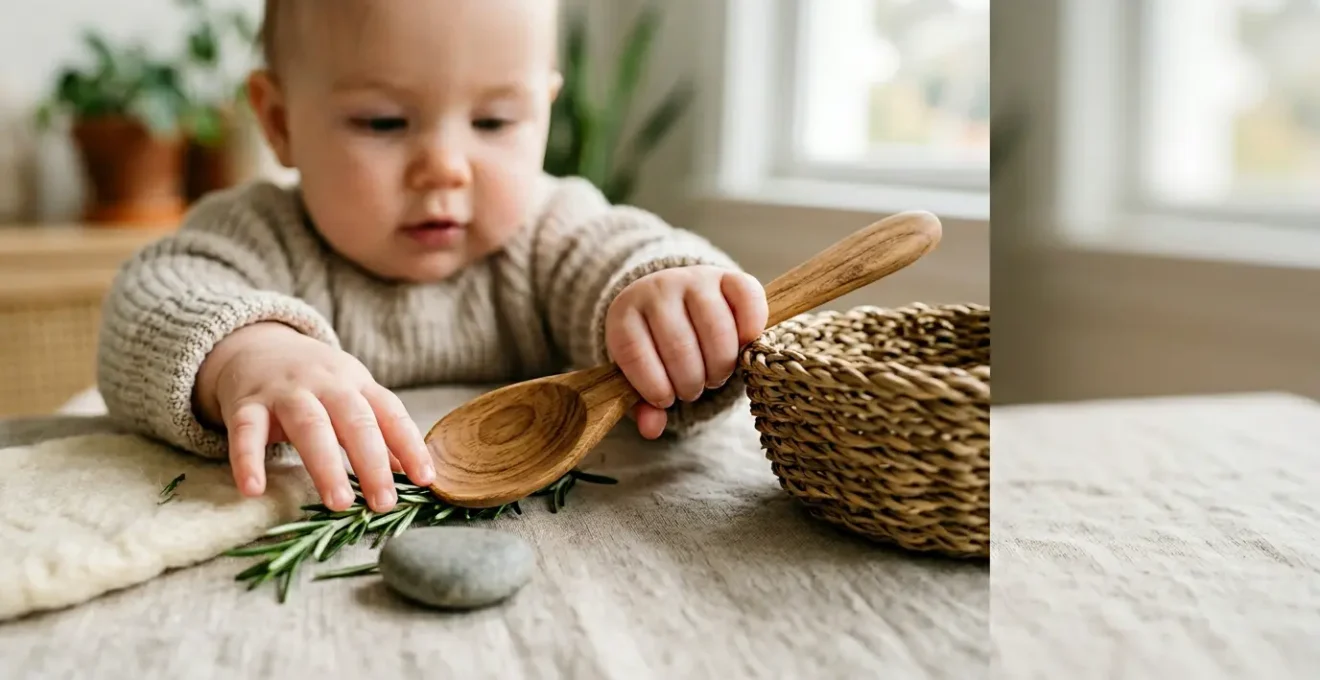
You can start by conducting a ‘sensory audit’ of your home. What textures, sounds, temperatures, and smells already exist? A ‘treasure basket’ filled with safe, everyday household objects—a wooden spoon, a metal whisk, a silk scarf, a pinecone—offers more diverse sensory input than a dozen plastic toys. Your own body is the ultimate sensory tool. Varying the pitch and rhythm of your voice, offering deep pressure through a firm hug, or engaging in gentle rocking provides powerful vestibular (balance) and proprioceptive (body awareness) input that is crucial for regulation and motor planning.
The goal is to create a ‘yes-space’—a safe area where your baby is free to explore without constant intervention. This doesn’t mean a chaotic free-for-all, but a thoughtfully prepared environment where curiosity is the guide. By integrating these ‘sensory snacks’ into daily routines, like letting your baby feel the cool wipe during a nappy change or smell the herbs you’re chopping for dinner, you are consistently nourishing their brain without adding a single item to your to-do list or shopping cart.
Why Your Baby’s Extreme Reaction to Tags, Sounds, or Textures Might Signal Sensory Differences?
While most babies will explore new sensations with curiosity, some may have more intense reactions. You might notice your baby becomes intensely distressed by the tag on their clothing, cries at the sound of the vacuum cleaner, or gags on certain food textures. While it’s easy to dismiss this as ‘fussiness’, it can sometimes be an early sign of how their nervous system is wired. These extreme reactions may indicate a difference in sensory processing, where the brain perceives certain stimuli as overwhelming or even painful. It’s as if their personal ‘volume dial’ for that sense is turned up too high.
This is a core concept in understanding neurodiversity. Every brain is unique in how it registers, interprets, and responds to sensory information. For some, the sensory tolerance window is naturally narrower. Hypersensitivity (over-responsiveness) to touch, sound, or sight is a common trait. As Dr. Elysa Marco, a cognitive and behavioral pediatric neurologist, explains, « Children with SPD struggle with how to process stimulation, which can cause a wide range of symptoms including hypersensitivity to sound, sight and touch, poor fine motor skills and easy distractibility. »
Recognising this isn’t about labelling your child, but about understanding them. It’s a crucial shift from asking « Why are they being so difficult? » to « What is their brain telling me about this experience? » While full-blown Sensory Processing Disorders are typically diagnosed later, with studies showing they affect 5 to 16 percent of school-aged children, acknowledging these early tendencies allows you to become a more effective co-regulator. You can learn to introduce new stimuli more slowly, provide tools for calming, and modify the environment to support their needs, rather than forcing them into a sensory box they don’t fit.
Why Over-Protecting Your Baby From Mess and Noise Limits Their Sensory Tolerance?
Your instinct to shield your baby from anything messy, loud, or unpredictable is powerful. It comes from a place of love. However, the science of neurodevelopment suggests this protection, when over-applied, can backfire. Think of it like the ‘hygiene hypothesis’ for the senses. Just as the immune system needs exposure to a variety of microbes to learn to function correctly, the nervous system needs exposure to a variety of sensory inputs to build tolerance and resilience. A brain that only ever experiences soft textures, quiet rooms, and predictable patterns has no opportunity to learn how to process—and eventually ignore—the more complex sensory information of the real world.
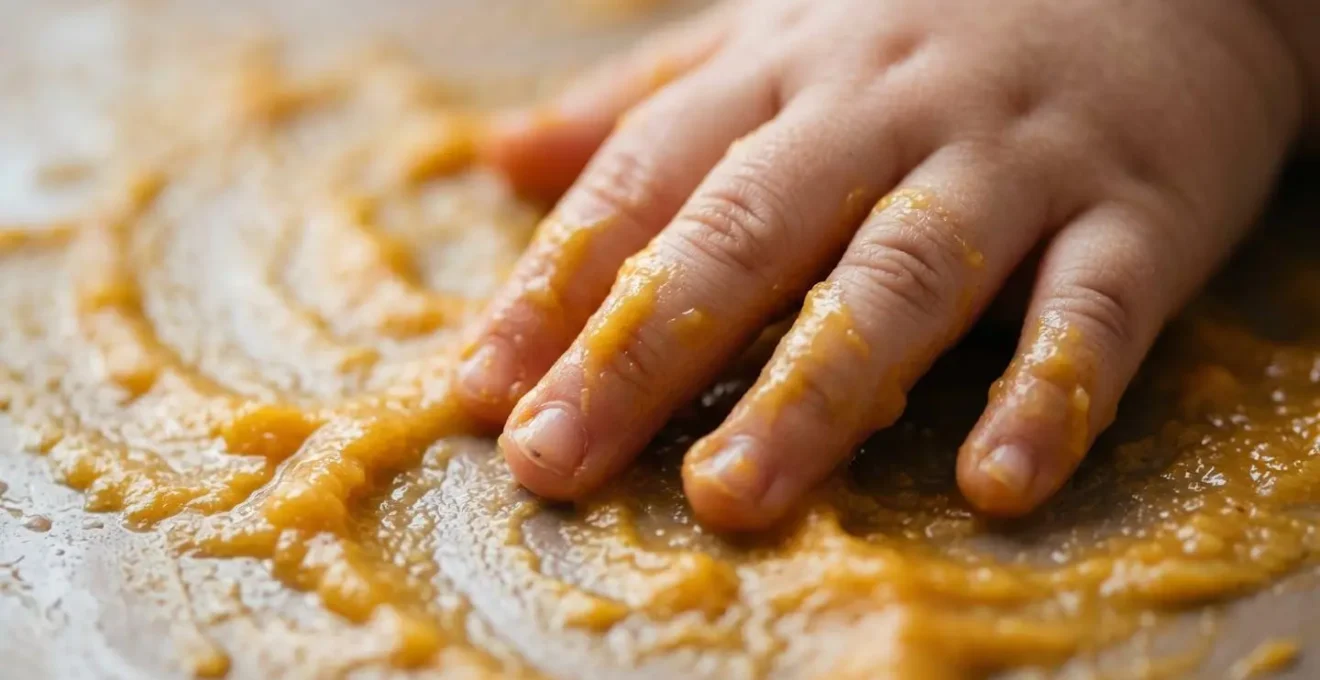
This creates a smaller ‘sensory tolerance window’. A child with a wide window can be in a bustling café and still focus on their parent’s face. A child with a narrow window may have a meltdown in the same environment because their brain is overwhelmed and cannot filter the input. Your job is not to keep them out of the café, but to gradually and safely help them widen their window. Research, even in animal models, supports this. A study on rats found that a lack of varied textural experience (a soft-only diet) led to negative changes in brain function, demonstrating that neurodevelopment is intertwined with exposure to complex sensory inputs. Every time you say ‘yes’ to a little mess—letting them squish a banana in their hands or splash in a puddle—you are giving their brain a small, manageable workout, strengthening its ability to cope. By constantly ‘protecting’ them, you may be inadvertently fostering the very sensitivity you hope to avoid.
How to Create Sensory Breaks for Babies Who Become Overwhelmed Easily?
Encouraging more sensory experiences does not mean pushing your baby into a state of constant, frazzled overstimulation. The art of being a good sensory facilitator is knowing when to introduce input and, just as importantly, when to pull back. Learning to read your baby’s cues for being overwhelmed is a superpower. It’s the difference between a fun, brain-building activity and a stressful meltdown. An overstimulated baby is not a ‘naughty’ baby; their nervous system has simply reached its capacity for input. Their ‘sensory tank’ is full.
Early warning signs might include gaze aversion (looking away), increased fussiness or jerky movements, arching their back, or suddenly losing engagement with a toy. When you see these signals, it’s time for a sensory break. This isn’t a punishment, but a reset. The goal is to reduce the amount of incoming information to allow their nervous system to recalibrate. This often involves offering calming, organising sensory input. For many babies, this means deep pressure (a firm hug, being held tightly in a sling) or rhythmic vestibular input (gentle rocking or swaying). For others, it might be a reduction in auditory and visual input: dimming the lights and moving to a quiet room.
It’s also vital to distinguish between a tired baby and an overstimulated one. While the signs can look similar, their needs are different. A tired baby needs to sleep. An overstimulated baby often needs a sensory reset *before* they are calm enough to sleep. Learning your baby’s unique ‘reset button’ is a process of observation and trial and error, but it’s one of the most valuable skills you can develop in supporting their sensory health.
Your Action Plan: Implementing Proactive Sensory Breaks
- Identify your baby’s unique ‘reset button’: Observe what calms them best. Is it deep pressure (firm hugs), rhythmic movement (rocking), or specific sounds (white noise)? Note what works.
- Learn to read the ‘sensory tank’: Watch for early warning signs before a meltdown, such as fidgeting, looking away, or increased fussiness. Aim to offer a break proactively.
- Modify the environment, not just the baby: When you see signs of overwhelm, think ‘reduce’. Dim the lights, turn off background noise, or step outside for a complete change of sensory scenery.
- Differentiate ‘tired’ from ‘overstimulated’: A key distinction. Overstimulation often involves wide eyes and frantic movements, while tiredness shows as eye rubbing and slowing down. Address the true need.
- Plan for downtime: After a stimulating outing like a playgroup or shopping trip, schedule a quiet period at home with low sensory input to allow their nervous system to recover.
Why Babies Who Only Eat Smooth Purees at 9 Months Often Reject Lumps at 12 Months?
The journey into solid foods is one of the most significant sensory experiences of your baby’s first year. It’s a common belief that starting with silky smooth purees is the gentlest and safest path. While this is true for the very first introductions, remaining on this path for too long can create significant challenges down the road. The period between 7 and 10 months is a critical developmental window for oral motor skills. This is when a baby’s brain is primed to learn how to manage more complex textures.
During this window, the mouth and tongue are developing the ability to move food from side to side (tongue lateralization) and to use the gums for a ‘munching’ reflex. These are the precursor skills to proper chewing. As one study in the American Journal of Speech-Language Pathology notes, « Between 7-10 months, a critical window opens for developing tongue lateralization and the munching reflex. If this window is missed, the brain has a harder time learning the skill later. » Exposing your baby to lumpier, thicker, and more varied textures during this period is essential ‘exercise’ for their mouth muscles and the neural pathways that control them.
If a baby is only offered smooth purees, their brain doesn’t receive the necessary signals to develop these more advanced skills. When a lump is finally introduced at 12 or 15 months, the brain may interpret it not as food, but as a foreign object, triggering a gag reflex as a safety mechanism. This is often misread as ‘picky eating’, when in fact it’s a skill deficit. Research confirms that a critical window exists for introducing lumpy solids, and babies introduced to them before 10 months are more likely to accept a wider variety of foods later on. Delaying texture is a classic example of how well-intentioned protection can inadvertently limit a crucial developmental process.
Why Your Baby’s Skin Cannot Handle Adult Products Until Month 3?
While this guide champions exposure, it’s about discerning, intelligent exposure. Not all stimuli are created equal. When it comes to your baby’s skin, a ‘less is more’ approach is scientifically sound, especially in the first three months. A newborn’s skin is fundamentally different from an adult’s. It is more delicate, more permeable, and has not yet fully developed its protective functions. In fact, research shows that a newborn’s outermost skin layer is up to 30% thinner than an adult’s, making it significantly more susceptible to irritation and absorption of external substances.
Beyond this structural thinness, the skin is also developing two crucial defence systems: the acid mantle and the microbiome. At birth, a baby’s skin has a relatively neutral pH. Over the first few weeks, it naturally becomes more acidic, forming the ‘acid mantle’ that helps ward off harmful bacteria. Simultaneously, it is being colonised by a unique community of beneficial microbes—the skin microbiome—which plays a vital role in immune function. As one case study on neonatal skin development explains, this process coincides with the skin’s ability to retain water and block chemicals. Harsh adult products, or even many scented ‘baby’ products, can disrupt this delicate process, stripping the skin of its natural oils, altering its pH, and interfering with the establishment of a healthy microbiome. This early disruption has been potentially linked to a higher risk of conditions like eczema and allergies later on.
This is where your role as a sensory facilitator becomes one of a wise gatekeeper. You are protecting your baby not from beneficial sensory input like touch or texture, but from harsh chemical inputs their system is not yet equipped to handle. Your goal is to support the skin’s natural developmental process, not to interfere with it using fragrances, soaps, and lotions.
Key Takeaways
- Your baby’s brain builds two million new neural connections per second; varied sensory inputs are the raw materials for this construction.
- Over-protecting from ‘mess’ and ‘noise’ can narrow your baby’s sensory tolerance, leading to pickiness and overwhelm later on.
- Your goal is to be a sensory facilitator, not a gatekeeper. Use everyday items and routines to provide a rich sensory ‘diet’ without buying expensive toys.
Why Water and Cotton Wool Beat Fancy Wipes for the First 6 Weeks?
In the world of baby products, the options for cleansing are endless, with wipes promising convenience, pleasant smells, and gentle formulas. However, for the first month to six weeks of your baby’s life, the most expert advice is often the simplest and cheapest: plain water and soft cotton wool. This recommendation is not an old-fashioned whim; it is rooted in a deep understanding of the newborn’s developing skin barrier. As we’ve discussed, this period is a critical time for the establishment of the skin’s protective acid mantle and microbiome.
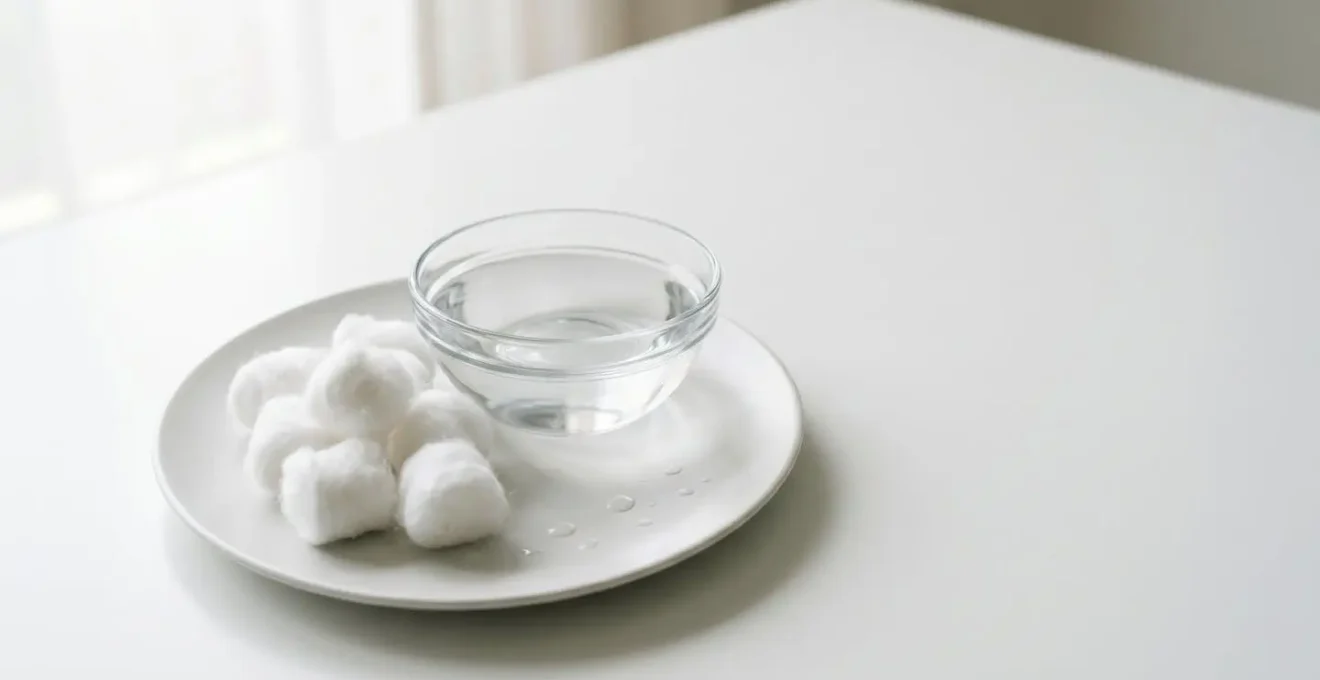
Even the ‘gentlest’ of commercial wipes can contain a cocktail of ingredients—preservatives, fragrances, and surfactants (cleansing agents)—that can disrupt this delicate ecosystem. As research from the Evolution, Medicine, and Public Health Journal highlights, « Common hospital practices such as newborn bathing and exposure to antibiotics may influence the initial development of the infant skin microbiome. » This principle extends to what we use at home every day. Introducing complex chemical compounds to the skin before its own defences are fully operational is an unnecessary risk. Water is neutral and non-irritating, while cotton wool is soft and minimally abrasive. This simple combination cleans effectively without stripping natural oils or leaving behind a chemical residue.
This ‘less is more’ approach for the first 6 weeks perfectly embodies the role of a discerning sensory facilitator. It validates your protective instincts in a targeted, science-backed way. It’s not about fearing the world, but about respecting your baby’s unique developmental timeline. By choosing water and cotton wool, you are making a conscious decision to support your baby’s biology, allowing their skin to mature at its own pace, building a foundation of health from the very beginning. After this initial period, you can re-evaluate and choose from the simplest, fragrance-free wipes if you wish, but giving the skin this undisturbed start is an invaluable gift.
Now that you understand the ‘why’ behind sensory needs and the ‘how’ of safe implementation, the next logical step is to confidently put this knowledge into practice. Start today by looking at your home and routine through this new sensory lens.