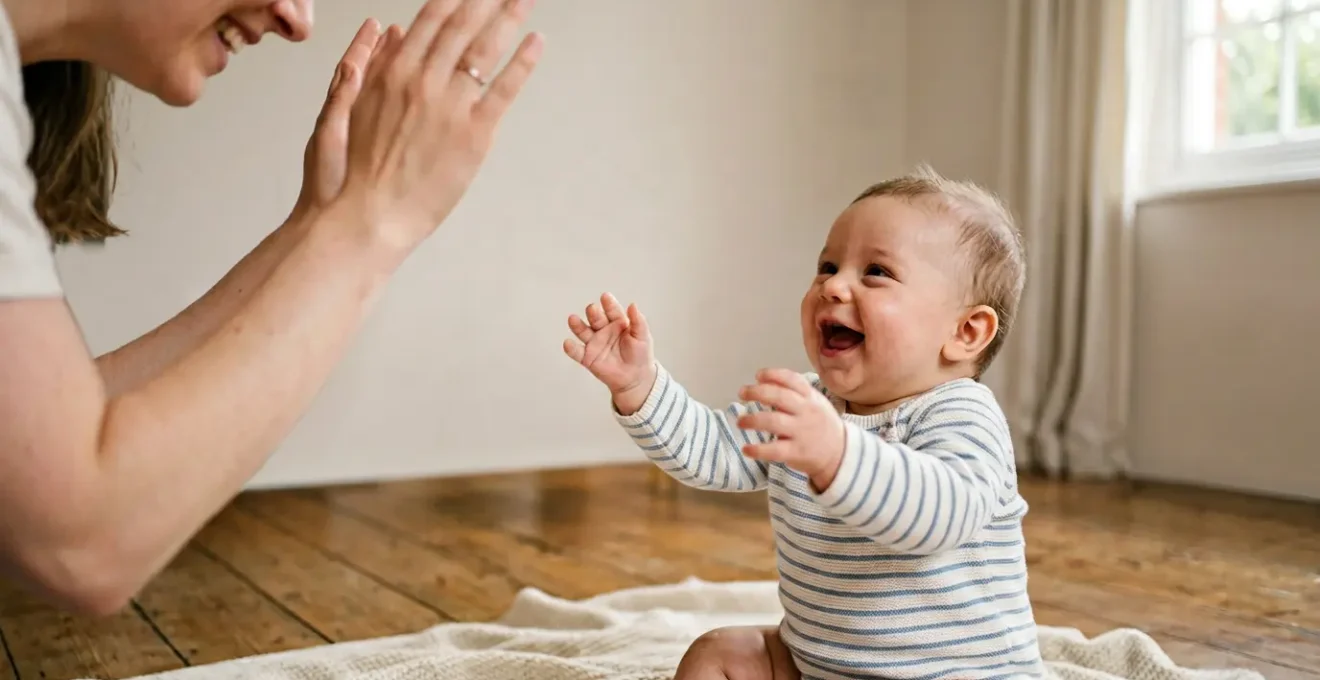
Your baby’s sudden clinginess isn’t a regression—it’s the first glorious, and challenging, sign of a brilliant cognitive breakthrough.
- They now understand you and objects continue to exist even when out of sight (object permanence).
- This single new skill powers everything from finding hidden toys to the emotional echo of missing you, which we call separation anxiety.
Recommendation: Embrace this phase by playing hiding games and establishing calm, consistent goodbye rituals. You aren’t just managing a difficult stage; you’re actively building the foundations for a securely attached and confident child.
One minute, you’re playing peek-a-boo, and your baby’s shrieks of laughter feel like the purest joy on Earth. They finally *get* the game. The next minute, you duck into the kitchen to grab a glass of water, and a heart-wrenching wail erupts. Your previously easy-going baby is suddenly a super-powered clinger, and leaving their sight, even for a second, feels like a betrayal. If you’re a parent in the UK feeling bewildered by this sudden switch, you’re not alone. You might be wondering if you’ve done something wrong or if your baby is suddenly insecure.
The common advice is to manage the « problems » separately: distract them, sneak out, or simply endure the clinginess. But what if these aren’t separate issues? What if the laughter of peek-a-boo and the tears of separation are two sides of the same incredible developmental coin? This isn’t about new problems to solve; it’s about understanding and supporting one of the most profound cognitive leaps your baby will ever make: the dawning of object permanence.
This is the moment your baby’s mental software gets a massive upgrade. They are transitioning from a world where « out of sight » means « out of existence » to one where they know you, their favourite teddy, and the family dog are permanent fixtures of their universe. This article will guide you through this « Great Unveiling. » We’ll explore the science behind it, how it reshapes their play, why it triggers separation and stranger anxiety, and most importantly, how you can support your little one as they build this new, more complex, and permanent understanding of their world.
This guide unpacks the remarkable cognitive shift happening in your baby’s brain. Below is a summary of the key milestones and behaviours we will explore, showing how they are all interconnected pieces of the same developmental puzzle.
Summary: Your Baby’s 8-Month Cognitive Leap Explained
- Why Your Baby Stops Looking for Dropped Toys at 3 Months but Searches at 8 Months?
- How Hiding and Finding Games Build Your Baby’s Memory and Understanding?
- Why Your Easy Baby Suddenly Cries When You Leave the Room at 8 Months?
- Why Sneaking Out While Your Baby Is Distracted Makes Separation Anxiety Worse?
- How a Parent-Scented Cloth Helps Your Baby Remember You Exist When You Leave the Room?
- Why the Clinginess at 8 Months Actually Means You Have Done Something Right?
- How Cause-and-Effect Understanding Leads to « How Do I Get That Toy? » Problem-Solving?
- Why Your Friendly Baby Suddenly Screams When Grandma Holds Them at 8 Months?
Why Your Baby Stops Looking for Dropped Toys at 3 Months but Searches at 8 Months?
For the first few months of life, your baby is a pure existentialist. If they can’t see, hear, or touch something, it simply ceases to exist. A dropped rattle vanishes from the universe. This is why a three-month-old, after an initial glance, will make no effort to search for a toy that has fallen out of their line of sight. Their brain’s operating system literally cannot process the concept of an object continuing to exist once sensory input is gone. It’s a world of « now you see me, now you don’t » in the most literal sense.
Then, around 8 months of age, a profound neurological shift occurs. This is the classic age for the emergence of « object permanence, » a cornerstone of cognitive development. Suddenly, when that rattle drops, a new mental process kicks in. Your baby might lean over the side of their highchair, eyes scanning the floor. They are no longer just reacting to the present; they are holding a mental image of the rattle and understand it must be *somewhere*. They have developed a mental representation of the toy that persists even when it’s hidden from view. This is the cognitive magic that makes peek-a-boo suddenly hilarious—they know you’re still there behind your hands!
Case Study: The ‘Impossible’ Event
Intriguingly, the seeds of this understanding are planted much earlier. Researcher Renée Baillargeon showed that even infants as young as 3.5 months have a nascent sense of object permanence. In her famous « impossible event » experiment, babies were shown a screen that appeared to move through a solid box hidden behind it. The infants looked significantly longer at this physically impossible event than at a possible one, suggesting an early, intuitive awareness that the hidden object should still be there. This shows that the understanding develops long before they have the motor skills to actively search, highlighting a fascinating gap between knowing and doing.
So, the baby who searches for the dropped toy is demonstrating a monumental leap: the birth of memory, prediction, and a stable, predictable world. They are leaving behind a world of fleeting sensory moments and entering one filled with permanent objects, people, and possibilities.
How Hiding and Finding Games Build Your Baby’s Memory and Understanding?
Now that your baby’s brain has unlocked the « object permanence » achievement, they are hungry to practice it. Hiding and finding games are not just idle pastimes; they are the perfect workout for this new cognitive muscle. Every time you hide a toy under a blanket and they pull it off to reveal the prize, you are strengthening vital neural pathways. These games are a direct, playful way to confirm their new hypothesis: things I can’t see still exist!
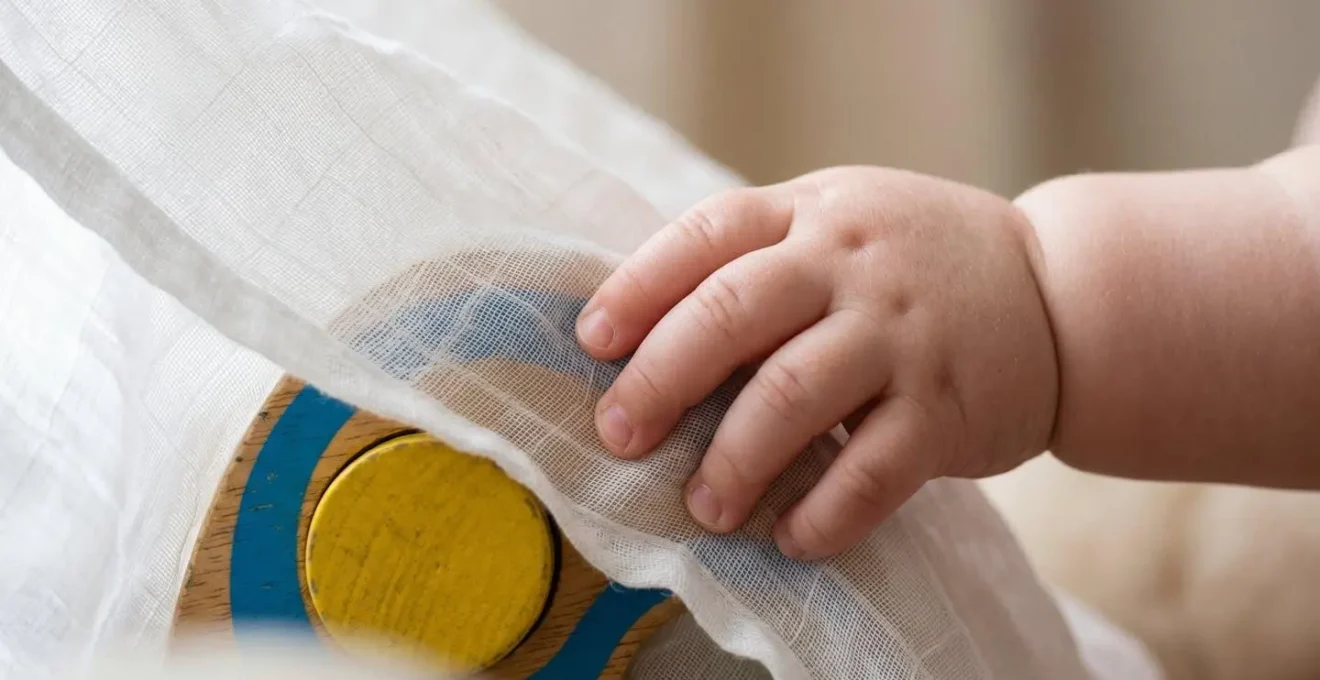
Start simply. Partially cover a favourite toy with a piece of muslin. The part that’s visible acts as a clue, prompting them to investigate. As they get better, you can hide it completely. You are not just teaching them about objects; you are building their working memory—the ability to hold information in mind to guide actions. This skill is the absolute foundation for later learning; research demonstrates that object permanence strengthens working memory, which is essential for literacy and mathematical skills down the line. Every game of peek-a-boo is a tiny step towards reading a book or solving an equation.
These games also build trust and connection. When you hide your face, their brain now holds an image of you. They anticipate your return. The moment you reappear with a cheerful « Peek-a-boo! », you fulfill that prediction, flooding their brain with relief and joy. This simple loop—prediction, disappearance, joyful reappearance—reinforces the security of your bond. It teaches them on a profound, pre-verbal level: you leave, but you always come back.
Why Your Easy Baby Suddenly Cries When You Leave the Room at 8 Months?
Welcome to the emotional echo of object permanence: separation anxiety. That gut-wrenching cry when you step out of sight is, counterintuitively, a sign of incredible cognitive and emotional progress. Before, when you left the room, your baby’s « out of sight, out of mind » brain simply deleted you from existence. There was nothing to miss because, in their world, you were gone. Now, everything has changed.
Thanks to their new-found object permanence, they know you still exist. They hold a perfect, love-filled mental image of you in their mind. The problem is, they also know you are *not here*. This creates a deeply unsettling conflict: « My source of comfort, safety, and food exists, but is somewhere else, and I have no power to bring them back. » This is a sophisticated and terrifying thought for a little person who is entirely dependent on you. The crying is not manipulation; it’s a logical, desperate plea for their world to be put right again.
This is a universal and healthy part of development. In fact, research shows that a phase of separation anxiety is something that virtually 100% of babies experience to some degree. While it often begins around 8 months, it’s important for parents to know that according to the American Academy of Pediatrics, separation anxiety typically peaks between 10 and 18 months. Knowing this timeline can help you see it not as a permanent personality change, but as a predictable wave you can ride together.
Why Sneaking Out While Your Baby Is Distracted Makes Separation Anxiety Worse?
In a desperate attempt to avoid the heart-rending tears, many parents are tempted by the « sneak away » strategy. While the baby is happily engrossed with a toy, you slip out the door unnoticed. It seems kind, a way to bypass the drama. However, in the long run, this makes separation anxiety much, much worse. Remember, your baby is currently working hard to understand that the world is a predictable place. When you vanish without a trace, you shatter that predictability.
The « sneak away » teaches them a terrifying lesson: « My favourite person can disappear at any random moment, without warning. » This can make them even more clingy and vigilant, as they can never truly relax, always half-watching you in case you try to pull a vanishing act again. The key to easing separation anxiety is not avoiding the goodbye, but mastering it. You need to build a ritual of departure that is predictable, loving, and confident. You are teaching them that a goodbye is not a disappearance; it is a « see you later. »
A successful goodbye is about being honest and reliable. It’s a brief, positive, and clear signal that you are leaving but will return. This ritual becomes their anchor in the storm of their big feelings. It won’t stop all tears initially, but over time, its consistency builds a profound sense of security and trust, which is the true antidote to anxiety.
Your Action Plan for Calm Goodbyes
- Create the Ritual: Develop a short, sweet sequence. It could be two kisses, a special phrase like « Mummy will be back soon, » and a wave. Keep it the same every single time.
- Be Quick and Calm: Once the ritual is done, hand your baby to their caregiver, say your final goodbye, and leave. Do not linger. Your confidence shows them there is nothing to fear.
- Practice Being Apart: Start small. Leave the room for 30 seconds and come back. Go to the garden for five minutes. Gradually increase the duration so they have many successful experiences of you leaving and returning.
- Celebrate the Reunion: When you return, make it a warm and loving moment. Praise them for being so brave. This reinforces the positive outcome of the separation.
How a Parent-Scented Cloth Helps Your Baby Remember You Exist When You Leave the Room?
While a consistent goodbye ritual provides the psychological structure to manage separation, a transitional object can provide the sensory comfort. A transitional object, often called a « comforter » or « lovey, » is a soft item that helps a child feel safe and secure in their parent’s absence. For a baby navigating the choppy waters of object permanence, this can be an invaluable tool. And you can supercharge its effectiveness with a simple, powerful ingredient: your scent.
A baby’s sense of smell is incredibly well-developed and deeply linked to the parts of the brain that process emotion and memory. Your unique scent means safety, food, and comfort. When you’re not physically present, your scent can act as a powerful proxy. It’s a tangible, sensory reminder of your existence and the security you provide. It’s the next best thing to having you there.
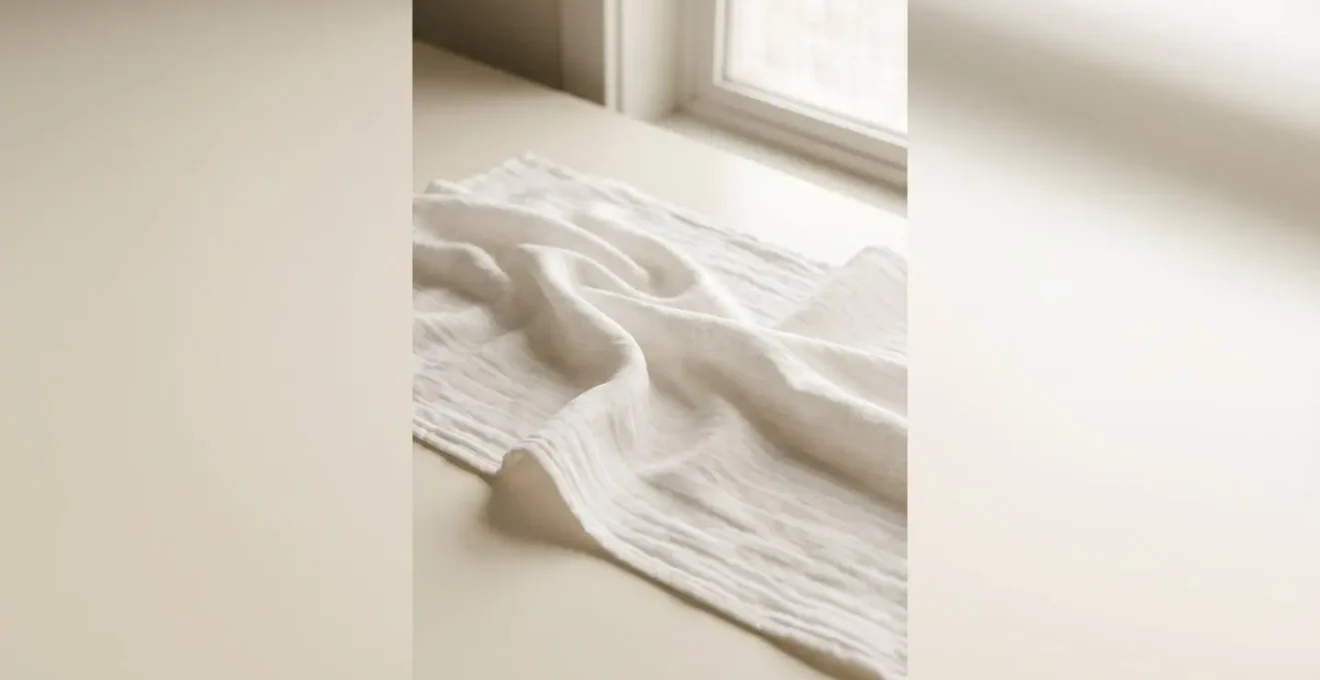
The process is simple. Take a small, breathable, and safe piece of fabric, like a muslin square. Sleep with it for a night or two, or simply wear it inside your shirt for a few hours. This will imbue the cloth with your scent. When you need to leave your baby—for a nap, at nursery, or with another caregiver—give them the scented cloth. As they hold it, touch it, and smell it, they are receiving a constant stream of sensory information that says, « You are safe. Your person is real and will be back. » It doesn’t replace you, but it provides a comforting, tangible link to you while you’re away, making the separation more manageable for their developing brain.
Why the Clinginess at 8 Months Actually Means You Have Done Something Right?
In a culture that prizes independence, a suddenly clingy baby can feel like a step backward. It’s easy to worry, « Have I spoiled them? Why won’t they let anyone else hold them? » It’s time to reframe this completely. Your baby’s clinginess is not a sign of failure; it is a trophy of your success. It is the clearest possible evidence that you have successfully built a deep, secure, and loving attachment bond.
Your baby has learned that you are their « secure base »—a concept from attachment theory that describes the safe harbour from which a child can explore the world, and to which they can return in times of distress. They cling to you because they know, with absolute certainty, that you are the source of safety and comfort. They have a clear preference for you over others not because they are « fussy, » but because they have formed a specific, powerful bond. This is a monumental achievement in their emotional development.
Separation anxiety in babies between 9 and 18 months of age is very normal, and typically fades over time. It’s a very important developmental milestone and completely healthy. They’ve formed an attachment to you and miss you.
– Katie K. Lockwood, MD, MEd, and Billie S. Schwartz, PhD, Children’s Hospital of Philadelphia
The quality of this early attachment has lifelong implications. Research into adult relationships has found a strong link between childhood attachment and adult emotional well-being. For example, research by Dr. Phillip Shaver and Dr. Cindy Hazan found that about 60% of adults exhibit a « secure » attachment style, which is associated with more trusting and positive relationships. This secure base is built right here, right now, in your loving arms. So, when your baby clings to you, take a deep breath. Feel the trust. You haven’t created a problem; you’ve built a person who knows how to love.
How Cause-and-Effect Understanding Leads to « How Do I Get That Toy? » Problem-Solving?
The cognitive explosion of object permanence isn’t just about people and emotions; it’s about the physical world, too. It ushers in a new era of understanding: cause and effect. Your baby is no longer a passive observer but an active « little scientist » conducting constant experiments to figure out how the world works. « If I bang this spoon, it makes a loud noise. » « If I push these blocks, they fall over. » « If I pull the cat’s tail… well, that’s another experiment. »
This new understanding combines with object permanence to create a powerful new skill: intentional, goal-directed action. This developmental stage, known as the « coordination of secondary circular reactions, » typically occurs during the 8-12 month period. Before, an action like grabbing a toy was more of a reflex. Now, it’s a plan. You can see the gears turning in their head. They see a toy they want that is just out of reach, perhaps on a small blanket.
The pre-object-permanence baby might just get frustrated. But the 8-month-old scientist thinks differently. They might look at the toy, look at the blanket, and make a connection. They might reach, not for the toy itself, but for the blanket. They pull the blanket towards them, bringing the toy into reach. This is not just a random action; it’s a multi-step plan. It demonstrates that they can hold a goal in their mind (get the toy), understand that one object can be used to affect another (blanket moves toy), and execute the necessary steps to achieve their goal. Every time you see them solve a simple physical puzzle like this, you are witnessing the birth of true problem-solving and executive function.
Key Takeaways
- The challenging behaviours around 8 months—clinginess, separation anxiety—are not regressions, but direct results of the cognitive leap of object permanence.
- Separation anxiety is a positive sign of a strong, healthy attachment bond; your baby cries because they know you exist and they love you.
- Support this phase not by sneaking away, but by building trust with consistent, loving goodbye rituals and nurturing their new skills through hiding-and-finding games.
Why Your Friendly Baby Suddenly Screams When Grandma Holds Them at 8 Months?
The final piece of the object permanence puzzle is often the most baffling for families: stranger anxiety. Your baby, who previously smiled and gurgled at every new face, now dissolves into tears the moment a well-meaning relative or friend tries to hold them. Grandma, who they adored last month, is suddenly treated like a terrifying monster. It can be embarrassing for you and hurtful for your loved ones. But once again, this is not a social failing on your baby’s part; it’s a sign of their burgeoning intelligence.
Before object permanence, every face was just a fleeting, interesting pattern. But now, your baby is building a detailed « cognitive blueprint » of their world. This blueprint includes a very special, well-defined folder for « my people »—you, your partner, perhaps a sibling. They know your face, your smell, your voice. You are familiar and safe. Stranger anxiety emerges when a new person tries to interact with them, and their brain attempts to file this new data. They run a quick check: « Is this person in my ‘safe people’ folder? » The answer is no. According to developmental research, most children begin to show fearfulness around unfamiliar people around 7 to 8 months.
The resulting fear is a logical safety mechanism. Their brain flags the person as « unfamiliar, » and their instinct is to seek the safety of their secure base—you. The screaming is simply their most effective way of saying, « Alert! Unidentified person in the safe zone! Please return me to the primary caregiver immediately! » The best way to handle this is to respect their feelings. Don’t force them to be held by someone they are wary of. Let them stay in your arms where they feel safe, and allow them to observe the « stranger » from a distance. As they see you interacting calmly and happily with Grandma, they will slowly update their mental file: « This person is not in my core folder, but they are approved by my primary caregiver. They are safe. »
So embrace the peek-a-boo, navigate the goodbyes with confidence, and marvel at the little scientist in your arms. You’re not just getting through a phase; you’re witnessing the beautiful, complex construction of a human mind. You are their guide through this incredible cognitive great unveiling, and that sudden clinginess is just their way of holding on tight to the most important person in their newly permanent universe.