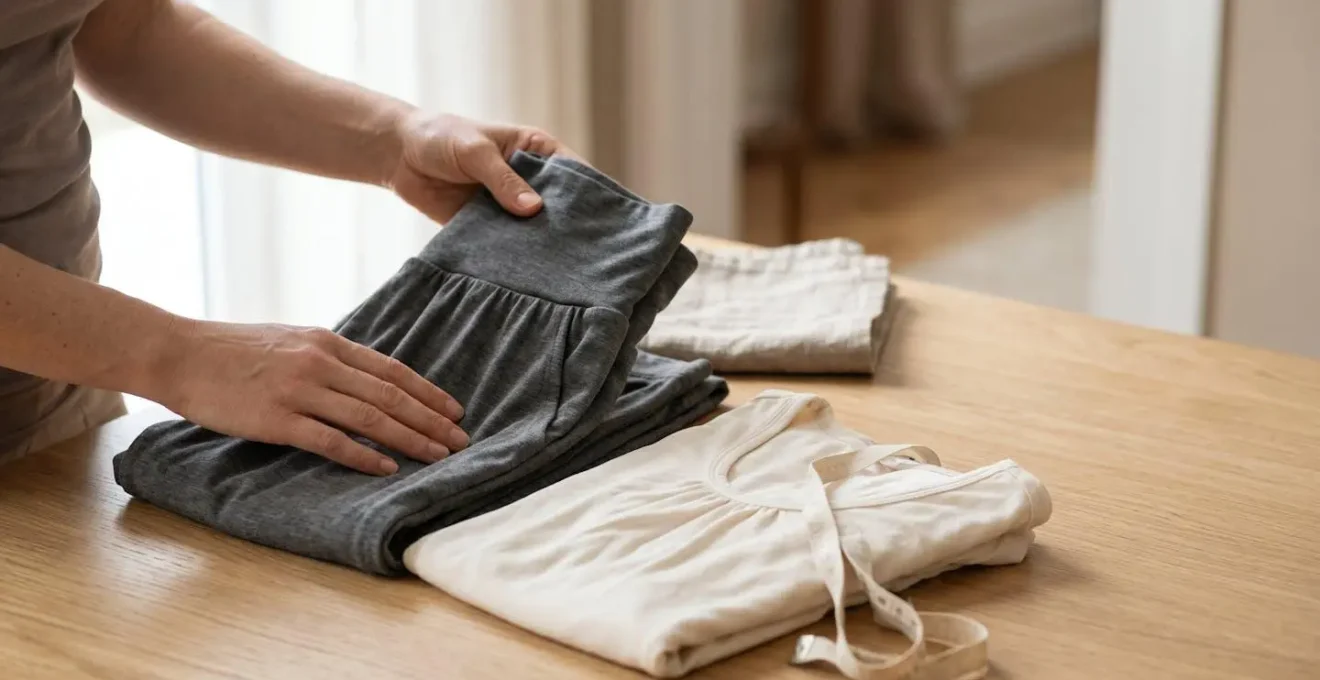
Contrary to the pervasive « bounce back » myth, your body doesn’t simply shrink back to its pre-pregnancy state after birth. This guide reframes postpartum recovery as a gradual « settle-in » period, exploring the crucial anatomical changes—from uterine involution to permanent shifts in your skeleton—that dictate why your old clothes won’t fit for a while. Understanding this timeline is the first step toward choosing self-compassion and functional comfort over unrealistic expectations.
There’s a picture many of us have in our minds: shortly after giving birth, we’ll triumphantly slip back into our favourite pre-pregnancy jeans. We see celebrities on magazine covers, seemingly having « bounced back » in weeks, and we internalize that pressure. So, it can be a deeply frustrating and confusing moment when, weeks after delivery, you look at your beloved joggers and realize they still don’t come close to fitting. This experience isn’t a personal failure; it’s a biological reality that is rarely discussed with honesty.
Most advice centres on vague platitudes like « be patient » or focuses solely on weight loss. But what if the key isn’t about losing weight, but about understanding the profound structural and physiological journey your body is on? The « bounce back » is a myth. The reality is a gradual, complex « settle-in » period where every part of you, from your uterus to your feet, is finding its new normal. This isn’t a setback; it’s the fourth trimester, and your body deserves to be supported, not judged.
This article is your realistic, compassionate guide to that process. We will replace pressure with knowledge. We’ll explore the anatomical reasons your body still looks and feels pregnant for weeks, provide practical strategies for dressing your new shape with comfort and dignity during labour and postpartum, and set realistic expectations for when you can truly expect to reconnect with your old wardrobe. It’s time to trade the joggers of yesterday for the wisdom that will carry you through today.
To help you navigate this period with confidence and kindness, this guide breaks down the essential information you need. Here is a look at what we’ll cover, from the science of your postpartum body to the practicalities of your new wardrobe.
Summary: Why Your Postpartum Body Needs Time and a New Wardrobe
- Why Your Belly Stays Pregnant-Looking for Weeks After Delivery?
- What to Wear During Labour When You Want to Stay Mobile and Comfortable?
- How to Dress Comfortably for 6 Weeks Postpartum With Just 5 Key Pieces?
- Why High-Waisted Jeans Irritate Your C-Section Scar for Months?
- When Can You Realistically Expect to Fit Into Your Old Clothes After Birth?
- Vaginal Birth vs C-Section Recovery: Which Activities Can You Resume at Week 4?
- Why You Should Not Buy Nursing Bras Until Week 38 of Pregnancy?
- Why Your Pelvic Floor Feels Broken 6 Weeks Postpartum Even After a C-Section?
Why Your Belly Stays Pregnant-Looking for Weeks After Delivery?
The moment after birth, many women are surprised to find they still look about six months pregnant. This is completely normal and has very little to do with « baby weight. » The primary reason is a process called uterine involution. Your uterus, an organ that grew to accommodate a full-term baby, doesn’t simply deflate like a balloon. It must shrink back through a gradual, hormonally-driven process.
To put this into perspective, consider the sheer anatomical reality of the change. Immediately after delivery, your uterus weighs around 1000 grams. Through the work of postpartum contractions (often felt as « afterpains, » especially during breastfeeding), it begins to contract and shed its lining. This process reduces its weight to about 500g at one week postpartum, and it only returns to its non-pregnant weight of approximately 50g by the six-week mark. This journey from the size of a watermelon back to the size of a pear takes time, and the « belly » you see is simply the physical evidence of this incredible healing process.

Beyond the uterus, your abdominal muscles have been stretched, and your body is retaining extra fluids used during pregnancy and labour. This combination creates the soft, rounded belly that is a hallmark of the fourth trimester. Viewing this as a sign of your body’s amazing capacity for creation and recovery, rather than an imperfection, is a powerful shift in mindset.
What to Wear During Labour When You Want to Stay Mobile and Comfortable?
While the standard-issue hospital gown is an option, what you wear during labour can significantly impact your comfort, mobility, and sense of dignity. The key is to think in layers and prioritize fabrics that are soft, breathable, and unrestrictive. Labour involves temperature fluctuations, medical access needs, and a heightened sensitivity to touch, so your clothing should work for you, not against you.
A « labour layering system » is a strategic approach that allows you to adapt to the different stages of labour. You want pieces that can be easily added or removed, that allow for fetal monitoring, and that don’t hinder movement if you plan to walk, sway, or use different labouring positions. Forget anything with a tight waistband or complicated fasteners. Think of your clothing as a tool for comfort, allowing you to focus your energy on the task at hand.
The goal is to feel covered yet accessible, comfortable yet practical. The right outfit can provide a small but significant sense of control and personal comfort during an intense and unpredictable experience. Choosing your own labour wear is an act of self-care and preparation that sets a positive tone for your birth experience.
Your Action Plan: The Labour Layering System
- Base Layer: Start with a comfortable nursing bra or a soft, seamless bralette made from a breathable fabric like bamboo or modal to prevent irritation during contractions.
- Core Layer: Add a loose, dark-coloured button-down shirt, a dedicated labour gown, or a simple robe that opens from the front. This provides easy access for medical staff (for fetal monitors, IVs, or epidural placement) while maintaining your sense of dignity.
- Bottom Layer: Opt for comfortable, elastic-waist shorts, loose pants, or even just your underwear. You need something that can be removed or adjusted easily and won’t restrict breathing or movement.
- Temperature Control: Be prepared for temperature swings. The layers allow you to add or shed coverage as you feel hot during intense contractions or cold in an air-conditioned room.
- Fabric First: Prioritize natural, ultra-soft materials like modal, bamboo, or organic cotton. Look for tagless and seamless designs to accommodate the hypersensitivity many women experience during labour.
How to Dress Comfortably for 6 Weeks Postpartum With Just 5 Key Pieces?
In the first six weeks postpartum, your body is in a state of constant flux. You’re healing, your hormones are shifting, and you’re navigating the demands of a newborn. The last thing you need is the pressure of a wardrobe that doesn’t fit or function. This is where a postpartum capsule wardrobe comes in—a small collection of hardworking, comfortable, and practical pieces that make getting dressed the easiest part of your day.
Forget about your pre-pregnancy clothes for now. Personal accounts and surveys often reveal a stark reality: for many mothers, as little as 16% of their pre-pregnancy wardrobe remains wearable postpartum, with shoes and bags being the main survivors. Instead of mourning what doesn’t fit, embrace a temporary, targeted wardrobe built for your current anatomical reality. This isn’t about hiding your body; it’s about honouring its needs with soft fabrics, gentle support, and easy access for breastfeeding if you choose to do so. The « one-handed test » is your new best friend: if you can’t manage it while holding a baby, it’s not for this season of life.
Building this capsule requires a mental shift. You are not buying a « transitional » wardrobe to get you back to your old self. You are investing in essential tools that will make your life easier and more comfortable during the intensive « settle-in » period. These five key pieces, chosen for their versatility and comfort, can be mixed and matched to create numerous outfits that will see you through everything from sleepless nights to your first walks outside.
Your 5-Step Action Plan: Building Your Postpartum Wardrobe
- Contact Points Audit: Go through your closet and identify all potential items that will touch sensitive postpartum areas like your belly, C-section scar (if applicable), and breasts. Assess them for rough seams, tight bands, or irritating fabrics.
- Existing Inventory Collection: Gather all the clothes you already own that might work. This includes maternity leggings, oversized t-shirts, stretchy sleep bras, and loose-fitting cardigans. Create a pile of « possibles. »
- Coherence Check: Put each « possible » item through a rigorous comfort and function test. Can you put it on and take it off with one hand? Does any part of it chafe, dig in, or restrict your movement? If it fails, it’s out.
- Emotional Filter: Look at the remaining items. Which ones make you feel cared for and comfortable, and which ones just feel « functional » or even a bit frumpy? Prioritize pieces that bring a sense of ease, not just utility.
- Integration Plan: With your audited inventory, identify the gaps in your 5-piece capsule. Do you have great leggings but no nursing-friendly tops? Do you need a versatile wrap? Make a targeted shopping list for only these missing essentials.
Why High-Waisted Jeans Irritate Your C-Section Scar for Months?
For mothers who have had a caesarean section, the desire to return to normal clothing like high-waisted jeans can be met with a painful reality. Even months after the birth, the scar area can be incredibly sensitive, numb, or prone to irritation from the slightest pressure. This isn’t just about the surface incision; it’s about the deep healing happening in the layers beneath.
A C-section involves cutting through multiple layers of tissue, including skin, fat, fascia, and the uterine wall. Critically, it also severs small sensory nerves in the abdomen. While the main incision may look healed on the outside within a few weeks, the internal nerve regeneration is a much longer process. In fact, medical information suggests it can take up to six months or even longer for these nerves to heal completely. During this time, they can misfire, leading to sensations of itching, burning, numbness, or extreme sensitivity (allodynia), where even a light touch feels painful.
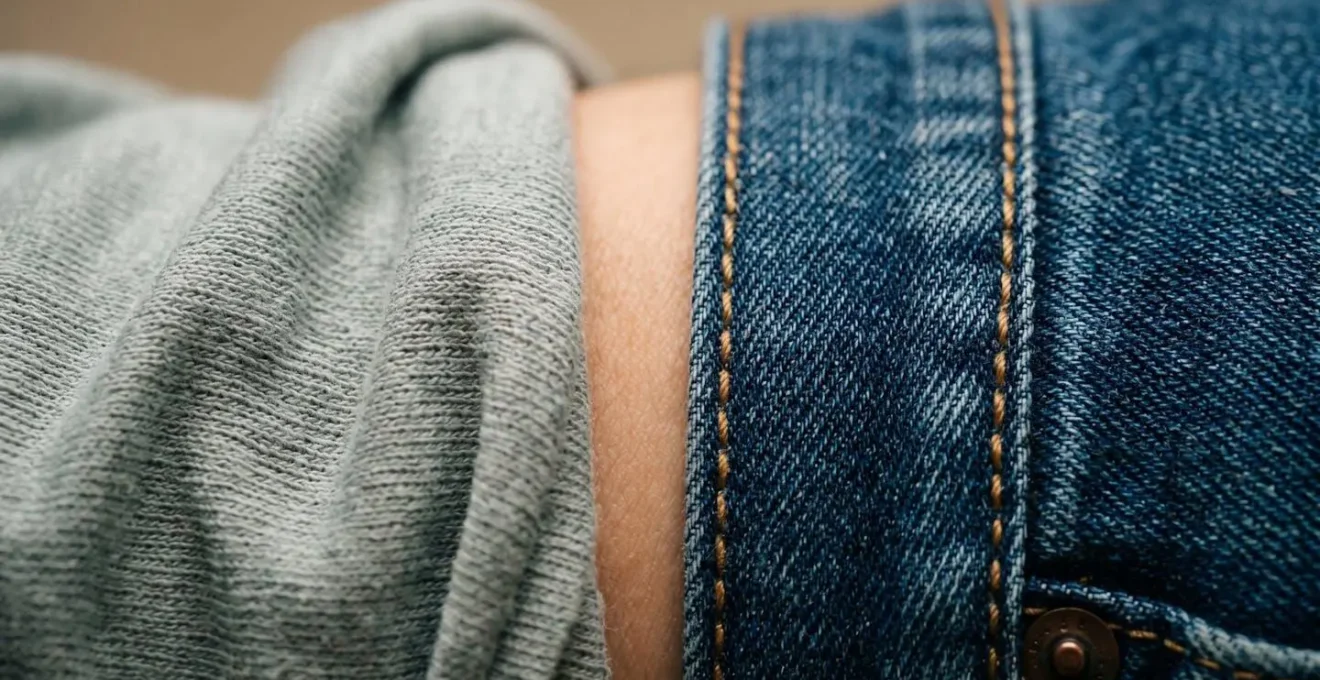
High-waisted jeans are particularly problematic for three reasons. First, the rigid fabric of denim offers no stretch or forgiveness. Second, the structured waistband, often with a zipper and button, creates a direct pressure point that sits right on or near the scar line. Third, the seam of the waistband itself can rub and chafe against the sensitive, healing tissue with every movement. This constant irritation can disrupt the healing process and cause significant discomfort. The key is to choose clothing that either sits well below the scar or is made of ultra-soft, seamless fabric that can go over it without applying any pressure.
The following table provides a guide to choosing trousers that respect your healing body, helping you understand which styles are friends and which are foes during your recovery timeline.
| Trouser Style | Waistband Type | Rise Position | Fabric Flexibility | Best for Recovery Stage | Scar Irritation Risk |
|---|---|---|---|---|---|
| Soft Joggers | Wide elastic, gentle compression | Mid to low-rise (below scar) | High (cotton-modal blend) | Weeks 1-8 | Very Low |
| Palazzo Pants | Elastic or drawstring, adjustable | Can sit above or below navel | High (flowing, no pressure) | Weeks 4-12+ | Low |
| Maternity Leggings | Over-belly soft panel | High-rise (above scar) | Very High (4-way stretch) | Weeks 6-12 (if tolerated) | Low to Medium* |
| High-Waisted Jeans | Structured denim, often with zipper/button | High-rise (directly on scar) | Low (rigid denim) | Avoid until 12+ weeks | Very High |
| Wrap Trousers | Tie/wrap closure, customizable | Adjustable positioning | Medium to High | Weeks 6+ | Low |
| *Note: Scar sensitivity varies; some women experience numbness while others have hypersensitivity (allodynia) for 6-12 months. Always prioritize comfort over style during healing. | |||||
When Can You Realistically Expect to Fit Into Your Old Clothes After Birth?
This is the million-dollar question for so many new mothers. The answer, however, is more complex than a simple number on a calendar. While the « six-week » postpartum check-up is often seen as a finish line, for many women, it’s just the beginning of understanding their new body. The truth is that some parts of your pre-pregnancy body may never return, and that is not a failure—it’s a testament to the profound transformation of motherhood.
Beyond the temporary changes of uterine involution and fluid retention, pregnancy can cause permanent shifts in your body’s very structure. The hormone relaxin, which loosens your ligaments to prepare the pelvis for childbirth, affects your entire body. This can lead to lasting changes in your skeleton. For example, your rib cage may have expanded to make room for your upward-shifting organs and may remain wider postpartum. This is why a top that fit perfectly before might feel tight across your back now, even if you’re at the same weight.
The most commonly cited and studied permanent change is in your feet. The combination of relaxin and the increased weight of pregnancy can cause the arches in your feet to flatten. As a result, your feet can become longer and wider—a change that is often permanent. In fact, research from The Ohio State University shows that women’s feet can grow by 2 to 10mm in length. This is why your favorite pre-pregnancy shoes might feel uncomfortably tight, and it’s a powerful reminder that the « settle-in » period involves your entire body, not just your belly. Accepting this new anatomical reality is key to moving forward with self-compassion.
Vaginal Birth vs C-Section Recovery: Which Activities Can You Resume at Week 4?
By week four postpartum, you might be feeling a bit more like yourself and eager to resume some normal activities. However, your body is still in a major healing phase, and what you can safely do depends heavily on your type of birth. While both vaginal and C-section births require a recovery period, the nature of the healing is different, impacting your activity levels in distinct ways.
A vaginal birth recovery primarily focuses on healing the perineum and pelvic floor. By week four, you may be cleared for gentle activities like walking, but high-impact exercise is still off the table. A C-section recovery, on the other hand, involves healing from major abdominal surgery. This means you must be extremely cautious about any activity that strains your core or puts pressure on your incision. Lifting anything heavier than your baby is generally prohibited.
Regardless of birth type, this is a time for listening to your body. « Too much, too soon » can lead to setbacks, injury, or increased bleeding. The goal isn’t to push through but to gently re-engage with movement in a way that supports your healing. Even your clothing choices matter—gentle compression from high-waisted leggings can feel supportive after a vaginal birth but may irritate a C-section scar, highlighting the need for personalized choices. The following table offers a general guideline, but the most important advice is to consult your healthcare provider before resuming any activity.
| Activity | Vaginal Birth (Week 4) | C-Section Birth (Week 4) | Recommended Clothing/Support |
|---|---|---|---|
| Walking (30 min) | ✓ Generally safe | ✓ Safe with caution | Supportive sneakers, high-waisted compression leggings (if scar tolerates) |
| Light household tasks | ✓ Most tasks OK | △ Avoid heavy lifting (over 10 lbs) | Comfortable loose clothing, abdominal binder if recommended |
| Gentle yoga/stretching | ✓ Pelvic-floor friendly poses | △ Avoid core-intensive poses | High-waisted soft pants, supportive nursing sports bra |
| Babywearing (structured carrier) | ✓ Safe with proper support | △ May cause scar pressure, use with caution | Wide waistband carriers that sit below C-section incision, soft wrap preferred |
| Babywearing (soft wrap) | ✓ Safe | ✓ Better option than structured | Wrap positioned to avoid scar line pressure |
| Returning to work (desk job) | ✓ Possible if feeling well | △ Consult provider first | Elastic-waist professional pants, layering pieces for nursing access |
| Driving | ✓ When comfortable | △ Only if no pain medication, can brake comfortably | Cushion between seatbelt and incision area |
| ✓ = Generally cleared | △ = Proceed with caution, consult provider | Note: Both recovery types require 6-8 weeks minimum before resuming high-impact exercise or heavy lifting | |||
Why You Should Not Buy Nursing Bras Until Week 38 of Pregnancy?
In the nesting flurry of the third trimester, it’s tempting to stock up on everything, including a drawer full of beautiful nursing bras. However, as a postnatal counsellor, this is one purchase I strongly advise delaying. Buying expensive, structured nursing bras before your baby arrives is often a waste of money because you cannot predict the size and shape your breasts will be. Your breasts go through three distinct waves of size changes, and buying for the final phase too early is a common mistake.
The size you are at 38 weeks pregnant is not the size you will be one week postpartum, nor is it the size you will be three months into your breastfeeding journey. The initial engorgement when your milk first comes in can temporarily increase your cup size dramatically. Investing in pricey, fitted bras at this stage is like buying shoes during a flight—you’re measuring a temporarily swollen state. Instead, the smart strategy is to use inexpensive, ultra-stretchy sleep bras or camisoles to navigate the first two waves. Only when your milk supply has regulated, typically around 6-12 weeks postpartum, should you get professionally fitted and invest in quality nursing bras. This is a perfect example of how understanding your body timeline saves you money and frustration.

This « Three Waves » strategy allows you to dress for the body you have at each stage, ensuring comfort, support, and proper function without breaking the bank. It’s about being responsive to your body’s needs rather than trying to force it into a predetermined plan (or bra).
Your Action Plan: The Three Waves of Breast Size Strategy
- Wave 1 – End of Pregnancy (Week 35-40): Your breasts enlarge as your body prepares for lactation. For this phase, buy only 1-2 inexpensive, stretchy sleep bras or soft, wire-free bras. Do not invest in structured nursing bras yet.
- Wave 2 – Engorgement (Days 3-7 Postpartum): When your milk comes in, your breast size can increase dramatically and temporarily, often by 1-2 cup sizes. This is your peak size. Use highly flexible sleep bras or nursing camisoles to accommodate this fluctuation.
- Wave 3 – Regulation (Weeks 6-12 Postpartum): Your milk supply stabilizes, and your breast size settles into a more consistent « new normal. » This is the ideal time to get a professional fitting and invest in 2-3 quality nursing bras that will support you for the remainder of your breastfeeding journey.
- The Bridge Budget: Plan to spend a small amount ($15-30) on a few ultra-stretchy bridge garments for the first two waves, then allocate your main budget for well-fitted bras once your size has stabilized after week 6.
Key takeaways
- Postpartum recovery is a slow « settle-in » period, not a « bounce back. » Uterine involution alone takes at least six weeks.
- Pregnancy can cause permanent structural changes to your skeleton, including wider ribs and larger feet, which can affect how old clothes fit forever.
- Your wardrobe should be a tool for comfort and function. A small postpartum capsule wardrobe is more practical than trying to fit into pre-pregnancy clothes.
Why Your Pelvic Floor Feels Broken 6 Weeks Postpartum Even After a C-Section?
One of the most surprising postpartum symptoms for women who have had a C-section is pelvic floor dysfunction. Issues like urinary incontinence (leaking when you cough or sneeze), a feeling of heaviness, or pain are often associated with vaginal birth, leading many to believe a C-section bypasses these problems. This is a significant misconception. While a C-section avoids the direct trauma of a baby passing through the birth canal, it does not erase the nine months of work your pelvic floor has already done.
The primary strain on your pelvic floor comes from the sustained weight of the growing uterus, baby, and amniotic fluid over the entire course of pregnancy. Your pelvic floor muscles form a supportive hammock at the base of your pelvis, and carrying this significant, ever-increasing load for 40 weeks stretches and weakens those muscles, regardless of delivery method. Postpartum urinary incontinence, which affects about one in three women after delivery, is a common outcome of this sustained pressure. This is the core of the anatomical reality that is often overlooked.
As one expert clearly explains, the damage is done long before labour ever begins. This insight is crucial for understanding why pelvic floor rehab is important for all postpartum mothers.
The pelvic floor is strained by the weight of the pregnancy for nine months, not just the act of a vaginal birth. The sustained pressure is the primary cause, regardless of delivery method.
– Dr. Shazia Malik, Popular Science
Therefore, every postpartum woman can benefit from seeing a pelvic floor physical therapist to assess function and create a rehabilitation plan. A C-section is major abdominal surgery that also impacts core stability, which is intrinsically linked to pelvic floor health. Ignoring these symptoms is not a solution; seeking specialized care is an essential part of a truly holistic recovery.
Your postpartum journey is unique, but it is not a race. Your next step is to consciously trade the pressure of the « bounce back » for the grace of the « settle-in. » Begin today by looking at your body with gratitude for what it has accomplished and choosing compassion and comfort in every small decision, starting with the clothes you wear.