
The greatest carbon monoxide danger to your baby isn’t your old boiler; it’s a false sense of security from an outdated alarm and a « sealed » energy-efficient room.
- Babies breathe faster, absorbing CO at a lethal rate before adults feel symptoms.
- Modern draught-proofing traps CO, turning a nursery into a toxic environment.
Recommendation: Check if your alarm has the BS EN 50291 kitemark. If not, or if it’s over 7 years old, replace it today.
The quiet hum of a sleeping baby is a parent’s most cherished sound. In that peaceful silence, you assume they are safe. But an invisible, odourless gas could be filling the room, and the first sign of danger might be one you tragically miss. This is the reality of carbon monoxide (CO), the silent killer.
You may think that having a CO alarm somewhere in the house is enough to tick a box. You might have one near the boiler, as recommended. But this minimal approach is a dangerous misunderstanding of the risk, especially for an infant. The fundamental question is not « Do I have an alarm? » but « Is my baby protected, right now, in the room where they sleep? » The answer often lies in the specific physiology of your child and the unique characteristics of your home.
This is not about general home safety advice. This is a direct, life-saving briefing. We will move beyond the platitude of « get an alarm » and explain the stark reality of physiological vulnerability—why your baby is a human detector for CO, showing symptoms long before you do. We will then cover the critical difference between mere compliance and genuine protection, explaining why your old alarm is a liability, where the new one must be placed, and how modern energy efficiency has created a deadly paradox in UK homes. Protecting your child starts with understanding the specific, elevated threat they face.
This guide provides a structured briefing on the critical aspects of carbon monoxide safety for your baby’s nursery. Follow each section to build a complete picture of the risks and the essential actions you must take.
Summary: A UK Parent’s Guide to Nursery CO Alarms
- Why Your Baby Shows CO Poisoning Symptoms Before You Even Feel Dizzy?
- Why Your Old CO Alarm Might Not Meet BS EN 50291 and Needs Replacing?
- Where to Mount the CO Alarm in Relation to the Cot, Ceiling, and Heat Source?
- Why Your Energy-Efficient Draught-Proofed Home Traps Carbon Monoxide More Easily?
- When to Test Your CO Alarm and Why the 7-Year Replacement Rule Is Non-Negotiable?
- How to Keep the Nursery at 16-20°C When Your Victorian House Has No Thermostat?
- Which UK Paint Brands Are Actually Low-VOC Enough for a Newborn’s Room?
- Why Babyproofing at 3 Months Prevents the A&E Visit at 7 Months?
Why Your Baby Shows CO Poisoning Symptoms Before You Even Feel Dizzy?
The most terrifying aspect of carbon monoxide is its subtlety, but the danger is amplified for infants due to their unique physiology. A baby is not a small adult; their body is far more susceptible. They have a higher metabolic rate and, critically, breathe faster. This means that in a room with a low but steady CO leak, an infant will inhale a proportionally larger, and therefore more toxic, volume of the gas than an adult in the same space. Their haemoglobin also has a higher affinity for CO, meaning the poison binds to their red blood cells more readily, starving their developing brain and organs of oxygen.
This heightened vulnerability is why an infant can show severe symptoms while adults in the same house feel nothing more than a slight headache or tiredness. As Boston Children’s Hospital confirms, « Unborn babies, infants, children, and pregnant women are especially vulnerable to carbon monoxide poisoning. » The early warning signs in a baby are often mistaken for common infant issues like colic, fussiness, or a simple virus. This makes a reliable, correctly placed alarm not just a precaution, but your only objective line of defence.
Understanding the difference between normal infant behaviour and the signs of CO poisoning is a life-or-death matter. The following table breaks down these critical distinctions.
| Symptom/Behavior | CO Poisoning in Infants | Normal Newborn Behavior | Key Differentiator |
|---|---|---|---|
| Sleepiness | Unusually difficult to wake, lethargic, unresponsive | Frequent sleep (14-17 hours/day), but easily roused for feeding | CO: Extreme lethargy, hard to wake even for feeding |
| Feeding Issues | Sudden refusal to feed, weak sucking, vomiting after feeds | Occasional fussiness at breast/bottle, normal spit-up | CO: Persistent refusal + vomiting, especially if multiple family members ill |
| Irritability | Inconsolable crying, high-pitched cry, confusion | Crying with identifiable cause (hunger, nappy, sleep) | CO: No obvious cause, worsens at home, improves when leaving house |
| Breathing | Rapid breathing, shortness of breath, respiratory distress | 40-60 breaths/min normal in newborns | CO: Respiratory rate increases beyond normal range + other symptoms |
| Consciousness | Loss of consciousness, passing out, seizures | Never normal in healthy newborns | CO: Medical emergency – call 999 immediately |
Why Your Old CO Alarm Might Not Meet BS EN 50291 and Needs Replacing?
Having a CO alarm is not enough; you must have the correct alarm. In the UK, the standard that matters is BS EN 50291. This certification is not a marketing gimmick; it’s a guarantee that the device has passed rigorous testing for sensitivity, reaction time, and durability. An alarm without this mark, or one that is old, provides a dangerously false sense of security. The standard dictates how quickly an alarm must react at different CO concentrations.
For instance, BS EN 50291 requires detectors to activate within 60-240 minutes at a low but persistent concentration of 50 parts per million (ppm). This is crucial for protecting a sleeping infant from slow, gradual poisoning. Older, non-compliant alarms may not trigger until levels are much higher, by which point it could be too late for a vulnerable child.
Case in Point: The 2022 UK Regulations Update
The UK government’s amendment to the Smoke and Carbon Monoxide Alarm Regulations in October 2022 was a crucial wake-up call. By extending the mandate for CO alarms to all rental properties with fixed combustion appliances, it highlighted a significant safety gap. Many existing alarms, especially those over 7 years old, did not meet the updated BS EN 50291-1:2018 standard. This newer standard introduced stricter requirements, including mandatory end-of-life indicators and better sensor technology. This proves that regulatory standards evolve for a reason: to close safety loopholes. Relying on an alarm from before this era is betting your child’s life on outdated technology.
Your first action is to physically check your alarm. Look for the British Standards Kitemark and the text « BS EN 50291 ». If it’s not there, the alarm is not fit for purpose. Replace it immediately. If it has the mark but you don’t know its age, replace it. An alarm’s sensor has a finite lifespan, a topic we will cover in detail.
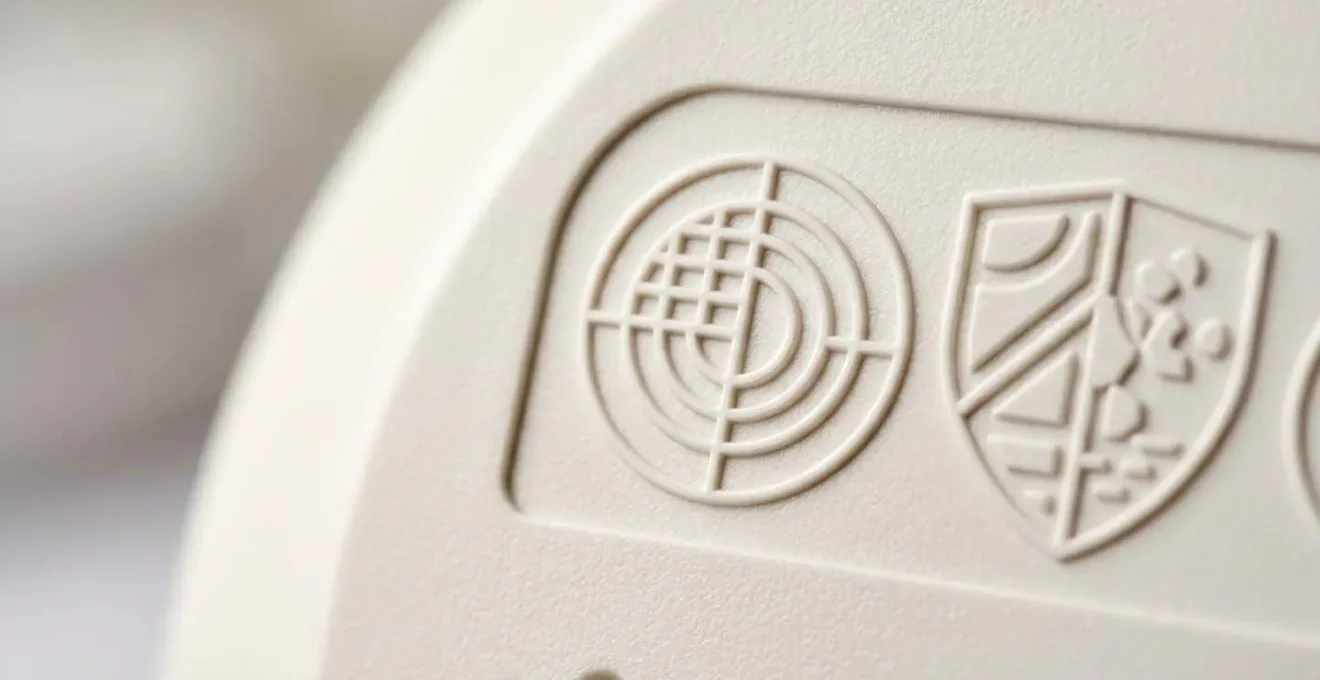
This certification is your only assurance that the device will function when needed most. Do not compromise.
Where to Mount the CO Alarm in Relation to the Cot, Ceiling, and Heat Source?
Installing a compliant alarm is only half the battle. Placement is everything. The common advice to « put it near the boiler » is dangerously incomplete, as it ignores how the gas can travel. As leading safety experts FireAngel highlight, citing the latest standards, CO does not just stay in one room. It can and does spread, permeating through walls and ceilings, and flowing through imperceptible gaps like keyholes and cable ducts. A boiler leak in the kitchen can become a lethal threat in an upstairs nursery.
Latest studies have shown that released CO (i.e. in a boiler room) can spread not only by diffusion through open spaces such as cable ducts, door sills or keyholes, but also by permeation through walls and ceilings throughout the entire building.
– FireAngel (citing BS EN 50292:2023)
Therefore, the only safe location for a nursery alarm is inside the nursery itself. The goal is to detect the gas at the earliest possible moment in the exact location where your baby breathes. Follow these UK standard guidelines precisely:
- Placement Height: The alarm must be placed at your baby’s breathing height. This means on a wall or a shelf, not on the ceiling. CO is slightly lighter than air but mixes evenly, so placing it at the level where your child sleeps is most effective.
- Distance from Cot: Never mount the alarm directly above the cot. This prevents it from falling into the cot during a battery change or if it fails.
- Distance from Doors/Windows: Keep the alarm at least 1 meter away from doors, windows, air vents, or extractors. Draughts can pull CO away from the sensor, delaying the alarm.
- Avoid Dead Air Spaces: Do not place it in corners or behind furniture where air doesn’t circulate. The sensor needs airflow to detect the gas.
- Humidity: Keep it away from humidifiers or damp areas, as moisture can damage the sensor unless it is specifically rated for such environments.
If the nursery contains a fuel-burning appliance itself (e.g., an older property with a gas fire), the alarm must be positioned between 1 and 3 meters horizontally from it. The primary rule is simple: protect the breathing zone.
Why Your Energy-Efficient Draught-Proofed Home Traps Carbon Monoxide More Easily?
We are rightly encouraged to make our homes more energy-efficient. We install double glazing, add loft insulation, and seal draughts to keep heat in and bills down. However, this creates a dangerous modern paradox: the « sealed box effect. » While these measures are great for warmth, they drastically reduce the natural ventilation that older, draughtier homes once had. This lack of airflow means that if a CO leak occurs, the gas has nowhere to go. It builds up, concentrating to lethal levels far more quickly.
The scale of this change in UK housing is vast. The latest data from the English Housing Survey shows that 89% of UK homes now have full double glazing. While a positive step for energy efficiency, it highlights the universal reduction in passive ventilation. This modern, airtight environment is precisely why a working, correctly placed CO alarm is more critical than ever before. You can no longer rely on a bit of fresh air getting in through a leaky window frame.
This problem is dangerously amplified in households experiencing fuel poverty. A sobering report from the End Fuel Poverty Coalition revealed a direct link between attempts to save heat and CO risk. Their research found that 18% of people in cold, damp homes reported high CO levels, compared to just 7% of the general population. These households often resort to blocking essential ventilation like air bricks and rely on older, poorly maintained boilers. The report also highlighted that 31% of all UK households lack a working CO detector, creating a perfect storm of increased risk and reduced protection. Your well-intentioned effort to create a warm, cosy nursery could inadvertently be creating a more hazardous environment. Ventilation is not the enemy; it is a critical part of your home’s safety ecosystem.
When to Test Your CO Alarm and Why the 7-Year Replacement Rule Is Non-Negotiable?
A CO alarm is an active safety device, not a fit-and-forget ornament. Its effectiveness depends entirely on regular maintenance and timely replacement. The electrochemical sensor that detects the gas degrades over time, whether the alarm sounds or not. This is not a manufacturing flaw; it is a chemical certainty. After 7 to 10 years (depending on the model), the sensor is no longer reliable. An alarm that beeps when you press the test button but is past its expiry date is giving you a false, and potentially fatal, sense of security. The test button only confirms the battery and circuitry are working, not that the sensor can still detect CO.
The 7-year replacement rule is therefore an absolute. Find the expiry date printed on the device (not the date you bought it) and set a non-negotiable reminder in your calendar. When that date arrives, replace it without question.
Beyond replacement, a strict testing and maintenance routine is essential. You are checking that the device is still powered and that its sensors have not been clogged by dust, which can prevent CO from reaching them. This is not a task to be forgotten; it is a life-saving habit.
Your Non-Negotiable CO Alarm Maintenance Plan
- Immediate Log: Upon installation, use a permanent marker to write the installation date on the alarm. Test it immediately using the ‘Test’ button. This is your baseline.
- Monthly Functional Check: Link the test to a memorable monthly event, like the first Sunday of the month or when the council bins are collected. Press and hold the ‘Test’ button until it beeps. This confirms power and sounder function.
- Bi-Annual Sensor Cleaning: Twice a year (e.g., when the clocks change), gently use a vacuum cleaner with a soft brush attachment to clean the outside vents of the alarm. This removes dust that could impede the sensor.
- Annual Expiry Date Audit: Every year on your child’s birthday, check the manufacturer’s expiry date printed on the alarm. If the replacement date is within the next year, purchase the new alarm now.
- The 7-Year Rule: Set a calendar alert on your phone for 7 years from the installation date. When it goes off, replace the alarm. Do not wait for it to chirp an end-of-life warning; be proactive.
Finally, remember what the alarm is for. As Energy UK states, it is a second line of defence. It warns you of a failure in your primary defence: the safe-running of your fuel-burning appliances. Annual servicing by a Gas Safe registered engineer is not optional.
How to Keep the Nursery at 16-20°C When Your Victorian House Has No Thermostat?
Maintaining a safe nursery temperature, as recommended by The Lullaby Trust (16-20°C), is a challenge in many older UK properties like Victorian houses, which often lack modern central heating controls. The temptation can be to use portable heating solutions, but this is an area where extreme caution is required. Under no circumstances should you ever use portable gas heaters, paraffin heaters, or any appliance designed for outdoor use (like a camping stove) inside the nursery. These devices are a primary source of carbon monoxide poisoning and have no place in a child’s room.
The goal is to add warmth safely, without introducing a new combustion risk. This means relying on your existing central heating system with smart upgrades, or using sealed, electric-only devices. Overheating the room is also a risk factor for Sudden Infant Death Syndrome (SIDS), so precise control is key. A simple digital room thermometer is an essential, inexpensive tool to give you an accurate reading of the actual temperature your baby is experiencing.
Here are safe, practical heating solutions for a nursery in an older home:
- Smart Thermostatic Radiator Valves (TRVs): These can be retrofitted to existing radiators. They allow you to set a specific temperature for the nursery radiator only, creating a micro-climate without needing a whole new boiler or system.
- Oil-Filled Electric Radiators: These are a good option as they are self-contained and have no combustion, meaning zero CO risk. Choose a model with a built-in thermostat for temperature control. Be aware they have higher running costs than central heating.
- Ensure Boiler Safety: Before winter, ensure your boiler and central heating system are serviced by a Gas Safe registered engineer. This is your single most important safety check.
- Never Block Vents: Do not block air bricks or other ventilation in an attempt to keep the room warm. These are essential for the safe operation of any fuel-burning appliances in your home.
- Dress the Baby, Not the Room: It is safer to control your baby’s temperature by layering their clothing appropriately for the room temperature, rather than trying to heat the entire room to a high level.
Which UK Paint Brands Are Actually Low-VOC Enough for a Newborn’s Room?
Creating a safe nursery environment extends to the very air your baby breathes. Many standard paints release Volatile Organic Compounds (VOCs), which are chemicals that can off-gas for weeks or months after painting, potentially irritating a newborn’s sensitive respiratory system. When preparing the nursery, choosing the right paint is a crucial health decision. The terminology can be confusing, but the distinction is clear: industry standards define Low-VOC paint as containing less than 50 grams of organic compounds per liter, while Zero-VOC paint contains 5 grams or less.
For a newborn’s room, the recommendation is to always opt for the lowest VOC content you can find, ideally certified Zero-VOC. This minimizes the chemical load in the air during a critical period of lung development. Fortunately, many brands available in the UK now offer family-friendly, low-toxin paint lines. When choosing, always check the tin for specific VOC content and certifications, as different products within the same brand can vary.
This comparison table highlights some readily available UK brands across different price points, helping you make an informed choice for your nursery.
| Category | Brand Examples (UK Availability) | VOC Level | Where to Buy | Approx. Price Point |
|---|---|---|---|---|
| Certified Zero-VOC Premium | Little Greene, Farrow & Ball Eco, COAT Paint | ≤5g/L | Specialist paint shops, online direct | £40-60/2.5L |
| Certified Low-VOC Mid-Range | Dulux Easycare (specific low-VOC lines), Crown Breatheasy | ≤50g/L | B&Q, Homebase, Wickes, online | £20-35/2.5L |
| Natural/Eco-Focused | Earthborn, Auro Organic Paints | ≤5g/L (natural pigments) | Independent eco-retailers, online | £30-50/2.5L |
| Budget Zero-VOC | Frenchic (chalk-based), specific B&Q own-brand eco lines | ≤5g/L | Online, major DIY retailers | £15-25/750ml |
Even with Zero-VOC paint, it is vital to ensure the room is well-ventilated during and after painting. Plan to decorate several weeks before the baby is due to arrive to allow any residual compounds to fully dissipate.
Key Takeaways
- Babies are physiologically more susceptible to CO poisoning, showing symptoms before adults.
- Only BS EN 50291 certified alarms provide adequate protection; replace any alarm older than 7 years.
- Placement in the nursery at the baby’s sleeping height is critical, not just near the boiler.
Why Babyproofing at 3 Months Prevents the A&E Visit at 7 Months?
Babyproofing is often seen as a task for when a baby starts crawling. This is a dangerous misconception. Effective babyproofing, especially concerning invisible threats like carbon monoxide, is about anticipation, not reaction. Installing and maintaining a CO alarm is the « Level Zero » of babyproofing—the foundational safety measure that must be in place before your baby even comes home. It protects them from a threat they cannot see, during a time when they are completely helpless.
The principle of « proofing » at 3 months to prevent the accident at 7 months applies to all aspects of home safety. At 3 months, a baby is largely stationary, giving you a crucial window to secure the environment before they develop the mobility to find its dangers. By the time they are 7 months old and crawling, it’s too late to start thinking about covering sockets or securing furniture. The same logic applies to CO safety. You don’t wait for a problem; you establish a non-negotiable safety protocol from day one.
This timeline integrates CO safety as the first and most fundamental step in a comprehensive babyproofing plan.
- Before Birth (Level Zero): Your first action. Install a BS EN 50291-certified CO alarm in the nursery. Test it. Ensure your boiler has had its annual Gas Safe inspection.
- 0-3 Months (Stationary Phase): This is the time to build habits. Test the CO alarm monthly. Ensure smoke alarms are working. Remove all loose bedding and cot bumpers, which are a primary suffocation risk.
- 4-6 Months (Rolling/Reaching Phase): As mobility begins, the physical environment becomes a risk. Secure heavy furniture to walls with anti-tip straps. Cover all electrical outlets. If your CO alarm is on a shelf, ensure it’s out of reach.
- 7-9 Months (Crawling Phase): The world is now at their level. Install stair gates and cabinet latches. Continue your monthly CO alarm test; its function is more critical than ever as your baby explores more of the home.
- 10-12 Months (Standing/Cruising Phase): Your baby can now pull themselves up on furniture. Re-check all anti-tip straps. Remove any items they could pull down on themselves. Your safety audit becomes a continuous process.
Home injuries are a leading cause of preventable harm to children. Waiting until your child is mobile is waiting too long. Establishing a fortress of safety from the very beginning is your primary responsibility.
Your child’s safety is not a matter of chance. It is a result of deliberate, informed, and proactive decisions. Check your alarm. Verify its certification and age. Position it correctly. Test it religiously. Do it today.