
The nausea from prenatal vitamins can make you feel trapped, worrying you’re not getting the essential 400mcg of folic acid your baby needs. However, the solution isn’t to force down a pill that makes you sick. By understanding how different nutrient forms are absorbed (bioavailability) and adopting strategic, UK-specific food swaps, you can build a robust, nausea-free nutrition plan. It’s about working with your body, not against it, to ensure optimal fetal development.
That wave of nausea hits right after you’ve dutifully swallowed your prenatal vitamin. It’s a frustrating and common paradox of early pregnancy: the very supplement you’re told is critical for your baby’s health is the one your body seems to be rejecting. You’re not alone in this struggle. Many expecting mothers in the UK find themselves caught between the non-negotiable need for folic acid and the debilitating sickness that can make supplementation feel impossible. The standard advice to « take it with food » or « try a different brand » often falls short, leaving you worried and uncertain.
But what if the key isn’t just about managing nausea, but about fundamentally re-engineering your approach to prenatal nutrition? This guide moves beyond generic tips. We will explore the science behind supplement-induced nausea and provide evidence-based, practical strategies tailored for a UK context. The core principle is that you have more control than you think. It’s not about enduring the sickness; it’s about understanding the mechanisms of nutrient absorption and using that knowledge to build a resilient, food-first plan that meets your needs and your baby’s, without the daily battle.
This article will walk you through the science of morning sickness, delve into critical nutrients like iron and protein, and compare different vitamin options available in the UK. We will equip you with actionable swaps, timing strategies, and safety information to navigate your pregnancy nutrition with confidence, even when you’re feeling your worst.
Contents: How to build your nausea-proof pregnancy nutrition plan
- Why Does Morning Sickness Peak at Week 9 and Fade by Week 14?
- Why Iron Deficiency in Pregnancy Doubles Your Risk of Preterm Birth?
- How to Get Enough Protein When the Smell of Meat Makes You Sick?
- NHS Healthy Start Vitamins vs Premium Brands: Which Delivers Better Absorption?
- The Hidden Vitamin A Danger in Liver Pâté That 60% of UK Mothers Ignore
- When to Take Your Iron Supplement to Avoid the Constipation That Ruins Your Day?
- Why Your Baby’s Skin Cannot Handle Adult Products Until Month 3?
- Why 80% of UK Mothers Want to Breastfeed but Only 34% Still Are at 6 Months?
Why Does Morning Sickness Peak at Week 9 and Fade by Week 14?
Understanding the timeline of morning sickness can provide some much-needed reassurance. It’s not random; it’s a hormonally driven process. The primary culprit is a hormone called human chorionic gonadotropin (hCG). This is the hormone detected in pregnancy tests, and its levels rise exponentially in the first trimester, supporting the early pregnancy. This rapid hormonal surge is what experts believe triggers the nausea and vomiting experienced by so many women. In fact, research shows that half of all pregnant women have both nausea and vomiting during these initial months.
The experience tends to follow a predictable arc. According to research published in the Journal of Midwifery & Women’s Health, nausea and vomiting during pregnancy are typically at their worst between 8 to 10 weeks after the last menstrual period. This timing correlates directly with the peak of hCG production. As your body and the developing placenta begin to regulate hormone levels towards the end of the first trimester, hCG levels start to plateau and then decline. Consequently, for most women, the symptoms begin to fade and usually disappear by 12 to 16 weeks of pregnancy.
While this biological explanation doesn’t make the symptoms any less real, it frames them as a temporary, albeit challenging, phase of a healthy pregnancy. Knowing there’s a light at the end of the tunnel can empower you to focus on management strategies for the short term, rather than feeling like this is your new normal for the entire nine months. It’s about navigating this peak period with smart nutritional choices until your body finds its new equilibrium.
Why Iron Deficiency in Pregnancy Doubles Your Risk of Preterm Birth?
While folic acid often takes centre stage, iron is another non-negotiable nutrient during pregnancy. Your body uses iron to make haemoglobin, a protein in red blood cells that carries oxygen to your tissues and, crucially, to your baby. During pregnancy, your blood volume increases by nearly 50%, dramatically increasing your iron requirements. When your body doesn’t have enough iron to produce the haemoglobin it needs, it leads to iron deficiency anaemia. This isn’t just a matter of feeling tired; it has serious implications for your pregnancy outcome, including an increased risk of preterm delivery and low birth weight.
In the UK, this is a significant concern. According to data from NHS Blood and Transplant, iron deficiency anaemia affects about 1 in every 4 pregnant women (25%). This high prevalence is why the NHS has a structured screening protocol in place. You should be offered a blood test for anaemia at your very first booking appointment (ideally by 10 weeks) and again as part of a routine check at 28 weeks. For those with risk factors like a vegetarian diet or a history of anaemia, more frequent testing may be recommended.
If you are diagnosed with iron deficiency anaemia, your GP or midwife will typically prescribe a high-dose iron supplement, usually ferrous sulfate. However, these tablets are notorious for causing side effects like constipation and nausea, which can be especially difficult to manage if you’re already struggling. This is where understanding nutrient timing and alternative food sources becomes essential. Reporting symptoms like extreme fatigue, breathlessness, or dizziness to your midwife between screenings is also vital for early detection and management.
How to Get Enough Protein When the Smell of Meat Makes You Sick?
Protein is the building block of your baby’s cells, tissues, and organs. Yet for many pregnant women, a powerful aversion to meat and poultry—once dietary staples—can make hitting daily protein targets seem impossible. The smell of cooking chicken or the texture of beef can become instantly nauseating. The good news is that the UK’s supermarkets are filled with excellent, palatable, and protein-rich alternatives that can help you bridge this gap without forcing down foods that make you feel ill.
The key is to think in terms of « protein swaps. » Instead of focusing on what you can’t eat, focus on what you can. Dairy products are a fantastic starting point; a pot of Skyr or full-fat Greek yogurt can provide a significant protein boost. Eggs, whether scrambled, boiled, or as an omelette, are a gentle and highly nutritious option. Don’t overlook plant-based sources, which are often easier on a sensitive stomach. Legumes like lentils, chickpeas, and edamame beans are versatile and can be consumed cold in salads or dips like hummus. For example, a single pot of Waitrose’s Edamame Beans is a quick and easy protein source.
Here are some direct, practical swaps you can find in major UK supermarkets:
- Instead of 150g chicken breast (31g protein): Combine 2 Richmond meat-free sausages (14g) with a 170g pot of Skyr yogurt (17g) for a total of 31g of protein.
- Instead of beef mince: Use a plant-based alternative like M&S Plant Kitchen No Mince in a bolognese or shepherd’s pie; the texture and protein content are comparable.
- For cold, easy protein: Look for Tesco’s lentil salads, Sainsbury’s hummus pots, or ready-to-eat lentil pouches from brands like Merchant Gourmet.
- On-the-go snacks: Roasted chickpeas, mixed nuts, and individual nut butter sachets are available in the snack aisles of Boots, Tesco, and Sainsbury’s.
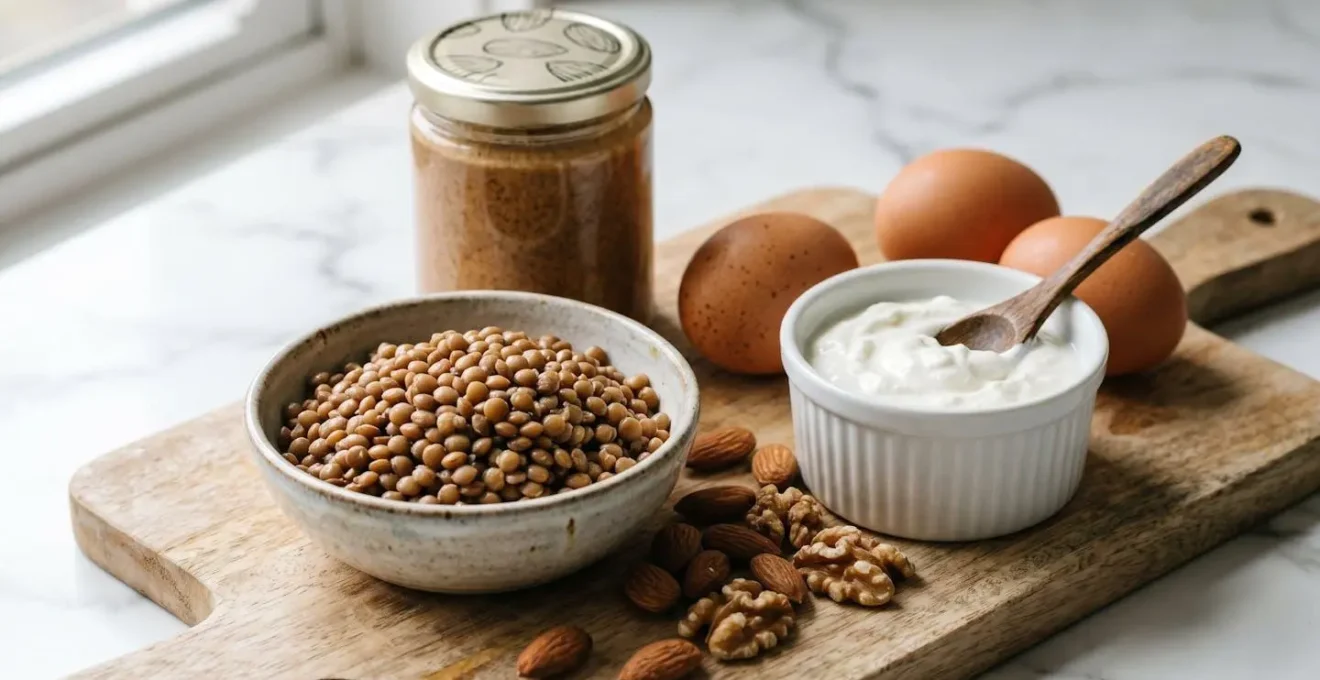
By shifting your focus to these alternatives, you can easily meet your protein needs without triggering aversions. The goal is to build a diet around a variety of sources, ensuring a steady supply of amino acids for your growing baby in a way that feels good for you.
NHS Healthy Start Vitamins vs Premium Brands: Which Delivers Better Absorption?
Navigating the supplement aisle can be overwhelming. On one hand, you have the government-backed NHS Healthy Start vitamins, which are free for eligible families and very affordable to purchase. On the other, premium brands command a high price, promising superior, « more natural » ingredients and better absorption. As a dietitian, my focus is on evidence and bioavailability: how well your body can actually use the nutrients in the supplement. The truth is, the « best » choice depends on your individual biology and budget.
The most significant difference often lies in the form of the nutrients provided. As the NHS Healthy Start programme states, their products provide the correct amount of vitamins recommended by the government. However, the forms may differ from premium brands. For instance, the crucial 400mcg of folate is provided as synthetic folic acid in the NHS vitamins. This is effective for most people. However, some premium brands use methylfolate (5-MTHF), the active form of folate. This is important for the estimated 40-60% of the population with MTHFR gene variants that can make converting folic acid into its active form less efficient.
Another key difference is iron. The Healthy Start women’s vitamins do not contain iron; if you are diagnosed with anaemia, the NHS prescribes it separately, usually as ferrous sulfate, which is effective but known for gastrointestinal side effects. Many premium brands include a « gentler » form of iron, like ferrous bisglycinate, which is chelated (bound to an amino acid) and often shows better absorption with fewer side effects. The table below breaks down these key differences.
| Nutrient | NHS Healthy Start Form | Premium Brand Form (Example) | Bioavailability Difference | Clinical Significance |
|---|---|---|---|---|
| Folate (400mcg) | Folic acid (synthetic) | Methylfolate (5-MTHF) | Methylfolate bypasses MTHFR enzyme conversion | Important for ~40% population with MTHFR gene variants; folic acid still effective for most |
| Vitamin D | Cholecalciferol (D3) | Cholecalciferol (D3) | Same form | No difference |
| Vitamin C | Ascorbic acid | Ascorbic acid or buffered | Minimal difference | Buffered forms may reduce stomach upset |
| Iron | Not included in Healthy Start women’s vitamins | Ferrous bisglycinate (chelated) in premium brands | Chelated forms show better absorption, fewer GI side effects | If iron needed, NHS prescribes separately as ferrous sulfate |
| Cost per month | Free for eligible families; ~£2-3 if purchased | £15-30 for premium brands | N/A | 5-15x price difference |
Ultimately, for many women, the NHS Healthy Start vitamins are perfectly adequate and cost-effective. However, if you experience side effects from prescribed iron, or if you have a known MTHFR mutation or simply prefer to invest in potentially more bioavailable forms, a premium brand might be a worthwhile consideration. The huge price difference is a major factor, and effectiveness should be discussed with your midwife or GP.
The Hidden Vitamin A Danger in Liver Pâté That 60% of UK Mothers Ignore
Among the list of foods to avoid in pregnancy, one of the most critical warnings concerns liver and liver products like pâté. This is not due to bacterial risk, like with some soft cheeses, but because of the extremely high concentration of retinol, a form of vitamin A. While vitamin A is essential for vision, immune function, and fetal development, excessive amounts are teratogenic, meaning they can cause birth defects. The body stores this fat-soluble vitamin, so even occasional high doses can pose a risk.
The NHS guidance on this is unequivocal and should be taken very seriously. It is a clear and direct warning that many people, often unknowingly, overlook, especially during festive periods like Christmas where pâté is a common feature on the table.
Pregnant women, or women thinking about having a baby, should not consume liver or liver products such as pâté, or supplements that contain vitamin A, including fish liver oil, unless advised by a GP, to avoid potential harm to the unborn baby.
The potential consequences are severe. According to the UK Committee on Toxicity, too much vitamin A can cause malformations including spina bifida, eye defects, and cleft palate. The risk is highest in the first trimester when major organs are forming. It’s important to note that the form of vitamin A found in plants, beta-carotene (in carrots, sweet potatoes, etc.), is safe as the body only converts what it needs. The danger lies specifically with preformed vitamin A (retinol) from animal sources and supplements.
Feeling left out at social gatherings is a valid concern, but there are many delicious and safe alternatives available in all major UK supermarkets. You can still enjoy the texture and savoury experience of pâté without the risk:
- Mushroom or vegetable pâté: Brands like Tideford and GranoVita offer safe, plant-based options rich in B vitamins, available at Tesco and Sainsbury’s.
- Smoked mackerel or salmon pâté: As these are made from the flesh of the fish, not the liver, they are safe and provide a great source of omega-3s.
- Hummus and other dips: Options like red pepper and walnut dip or various flavoured hummuses (beetroot, caramelised onion) offer a similar creamy texture.
- Lentil and herb spreads: These protein-rich options can be found in the health food sections of Waitrose and M&S.
When to Take Your Iron Supplement to Avoid the Constipation That Ruins Your Day?
For the many pregnant women prescribed iron supplements, the side effects can feel as challenging as the anaemia itself. NHS guidance notes that nausea, diarrhoea, or constipation are common side effects. Constipation, in particular, is a frequent complaint that can significantly impact your daily comfort. The good news is that you can dramatically improve both the absorption of iron and reduce these unwelcome side effects simply by being strategic about when and how you take your supplement.
The golden rule for maximising iron absorption is to take it on an empty stomach, ideally about one hour before a meal. This is because certain compounds in food can interfere with your body’s ability to absorb the iron. However, this can also be the time when it’s most likely to cause nausea. It’s a balancing act. If an empty stomach proves too difficult, taking it with a small, low-fibre snack is the next best option. A crucial partner for your iron supplement is vitamin C, which has been proven to significantly enhance iron absorption. Taking your tablet with a glass of orange juice (like Tropicana or Innocent) or another vitamin C-rich drink is a simple but highly effective strategy.
Equally important is knowing what to avoid. The tannins found in tea and coffee are potent iron inhibitors, capable of reducing absorption by up to 60%. It’s essential to avoid drinks like PG Tips, Yorkshire Tea, or your morning coffee for at least an hour before and after taking your iron. Calcium is another inhibitor, so you should avoid taking your supplement with milk, yogurt, cheese, or calcium-fortified cereals. If side effects persist even with these adjustments, speak to your midwife. Sometimes switching to taking a tablet every other day can provide the same benefit with fewer side effects.
Your action plan: The UK-Specific Iron Timing Schedule
- Optimal Timing: Take your iron tablet one hour before breakfast on an empty stomach to maximise absorption.
- Partner with Vitamin C: Swallow your tablet with a glass of orange juice or a drink high in vitamin C to boost its effectiveness.
- Avoid Tannin Blockers: Do not drink tea or coffee for at least one hour before or after taking your iron supplement.
- Separate from Calcium: Avoid taking iron at the same time as dairy products (milk, cheese, yogurt) or calcium-fortified foods.
- Troubleshoot Side Effects: If constipation or nausea occurs, try taking the tablet every other day or with a small meal, and discuss this with your midwife.
Why Your Baby’s Skin Cannot Handle Adult Products Until Month 3?
After nine months of careful nutrition and preparation, it’s natural to want to lavish your newborn with care, including sweet-smelling lotions and baby washes. However, it’s crucial to understand that a newborn’s skin is fundamentally different from adult skin. It is not just a smaller version; it’s a developing organ that is incredibly delicate and permeable. Using adult products, or even overly fragranced baby products, in the first few months can disrupt this critical development process.
Case Study: The First Three Months of Skin Development
Research into the development of the infant skin barrier shows that it matures gradually over the first months of life. In a newborn, the outermost layer, the stratum corneum, is thinner and less organised than an adult’s. This makes the skin more permeable, meaning substances can pass through it more easily. During this period, the skin is also developing its « acid mantle, » a protective film with a slightly acidic pH (around 5.5) that defends against harmful bacteria. Furthermore, the skin’s unique microbiome—the community of beneficial microorganisms—is just beginning to establish itself. Introducing harsh chemicals found in many adult products, such as sulfates, synthetic fragrances, and certain preservatives, can strip away these natural defences, disrupt the pH balance, and increase the risk of irritation, dryness, and allergic reactions.
This is why paediatric and dermatology professionals in the UK and worldwide recommend a « less is more » approach for the first few months. For at least the first month, plain water is sufficient for bathing. When you do introduce products, they should be specifically formulated for newborns: fragrance-free, pH-neutral, and with minimal ingredients. Any product with a strong perfume, even if marketed for babies, can be an irritant. The delicate skin of your baby simply doesn’t have the robust barrier needed to handle these complex formulations until it has had time to mature, a process that takes at least a few months.
This principle of protecting a developing system is a powerful parallel to prenatal nutrition. Just as you avoid certain foods and substances to protect your baby’s developing organs in the womb, you must also protect their developing skin barrier from external aggressors after birth. It’s a continuation of the same protective, nurturing care.
Key takeaways
- Nausea from prenatal vitamins is a common issue driven by hormonal changes, not a sign you’re doing something wrong.
- Meeting your 400mcg folic acid target is possible through a food-first approach, focusing on folate-rich foods and potentially more bioavailable supplement forms like methylfolate.
- Strategic timing and pairing of supplements (like iron with vitamin C) can dramatically increase absorption and reduce side effects like constipation.
Why 80% of UK Mothers Want to Breastfeed but Only 34% Still Are at 6 Months?
The gap between intention and reality in UK breastfeeding rates is stark. While the vast majority of mothers start out with the desire to breastfeed, continuation rates drop off sharply. This isn’t a reflection of individual failure but often points to broader, systemic gaps in maternal and nutritional support. The same challenges that make prenatal nutrition difficult—lack of personalised guidance, confusing information, and physical discomfort—can continue and intensify in the postnatal period, directly impacting a mother’s ability to sustain breastfeeding.
One powerful indicator of these support gaps can be seen in the uptake of government welfare schemes. For example, research on UK nutritional welfare support reveals that the take-up of free Healthy Start vitamin vouchers is significantly lower than that for food vouchers. This suggests that while financial support for food is accessed, the equally important nutritional supplementation aspect is being missed. The reasons are complex, but as researchers have pointed out, they often come down to practical barriers that reflect an under-resourced system.
As McFadden and colleagues noted in their exploration of the scheme, « Underfunding of local Healthy Start vitamin programmes affected both accessibility and supply, with complicated administrative processes. » When a new mother is exhausted, recovering from birth, and struggling with a newborn, navigating a complicated process to get vitamins is a barrier too high for many. This lack of accessible, consistent nutritional support is a critical piece of the puzzle. A mother who is depleted of nutrients like iron and B vitamins will find the physical demands of breastfeeding much harder to meet.
This creates a cycle where prenatal challenges can morph into postnatal struggles. A mother who was anaemic during pregnancy may have less energy to cope with the demands of round-the-clock feeding. The journey to successful breastfeeding doesn’t start at birth; it starts with a well-supported, well-nourished pregnancy. Closing the gap in breastfeeding rates requires a holistic approach that ensures every mother has easy, consistent access to nutritional guidance and support from her first midwife appointment all the way through the fourth trimester and beyond.
Navigating pregnancy nutrition when you feel sick is about strategy, not suffering. By understanding the science behind your symptoms and the nutrients you’re taking, you can make informed choices that work for your body. The next logical step is to take these ideas and create a personalised plan with your healthcare provider. Discussing options like methylfolate, chelated iron, and your specific food aversions with your midwife or GP will ensure you get the support you need to feel confident and well-nourished throughout your pregnancy.