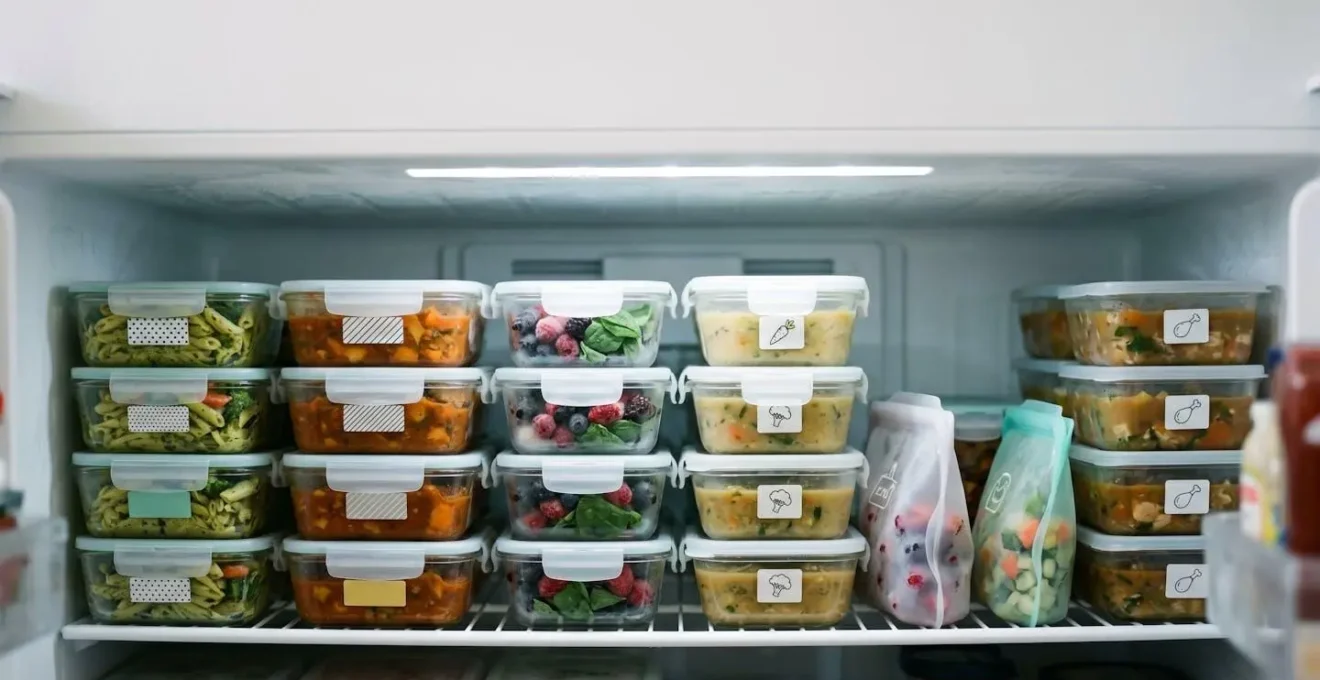
The goal isn’t a full freezer; it’s a supported and calm fourth trimester, and that requires building strategic ‘scaffolding’ for your recovery.
- Batch-cooking is only one pillar; physical recovery stations and pre-arranged human support are just as vital.
- Focusing on systems (like restocking supplies and delegating tasks) instead of just tasks (like cooking) is what prevents burnout.
Recommendation: Shift your focus from simply ‘prepping’ to designing an interconnected support ecosystem for your body, home, and mind before the baby arrives.
The pressure to have a freezer bursting with 30 perfectly portioned meals before your due date can feel immense. Blog posts and social media are filled with images of pristine, labelled containers, presenting it as the ultimate act of preparation. But for many heavily pregnant mothers in the UK, this pressure quickly turns into overwhelm. The sheer exhaustion of the third trimester makes a multi-day cooking marathon feel like an impossible task, leading to guilt and anxiety before the baby has even arrived.
While having meals ready is undeniably helpful, the hyper-focus on cooking misses the bigger picture. It treats postpartum as a problem that can be solved with a casserole. But what about the trips up and down the stairs when you’re healing? What about the loneliness that can creep in at 3 AM? What about the mental load of managing everything, even when the food is cooked?
The secret to a calmer, more supported fourth trimester isn’t just about stocking up. It’s about building a robust ‘scaffolding’ around you. This is an interconnected system of practical supplies, smart home setups, and, most importantly, human support that is designed *before* you need it. It’s about preparing not just meals, but your entire environment for rest and recovery. This approach transforms preparation from a source of burnout into a source of genuine peace of mind.
This guide will walk you through building that scaffolding, pillar by pillar. We’ll move beyond the freezer to create a holistic support system that truly prepares you for the realities and joys of life with a newborn, ensuring you can focus on healing and bonding, not just logistics.
Summary: Your Postpartum Scaffolding Blueprint
- Why You Need 200 Maternity Pads and Where to Buy Them Cheaply in the UK?
- How to Set Up a Bedside Recovery Station That Saves You 50 Trips Downstairs Daily?
- Feeding Corner vs Roaming Setup: Which Reduces Night Feed Exhaustion More?
- The Batch-Cooking Trap That Leaves You with 30 Meals but Zero Visitors
- When to Send the « No Visitors for 2 Weeks » Message Without Offending Family?
- How to Get Enough Protein When the Smell of Meat Makes You Sick?
- How to Create Shared Family Systems That Remove Planning From One Person’s Head?
- Why Your Postnatal Mental Health Depends on Who You Line Up Before Week 37?
Why You Need 200 Maternity Pads and Where to Buy Them Cheaply in the UK?
Let’s start with the least glamorous but most fundamental part of your recovery scaffolding: the physical supplies. The first few weeks postpartum involve significant bleeding, called lochia, which can last for up to six weeks. Running out of maternity pads in the middle of the night is a stress no new mother needs. The number ‘200’ might sound shocking, but it represents preparedness. It means you won’t have to think about ordering more, ask your partner to do an emergency run, or worry about supplies when your focus should be on your baby and your own healing.
Thinking in terms of a strategic restocking system removes the mental load. Instead of just one big pile, organise your supplies into tiers:
- Tier 1 (Bedside Caddy): Your immediate daily needs. This includes a handful of maternity pads, a peri bottle for gentle cleansing, perineal spray, and anything else for immediate comfort. This is your ‘within arm’s reach’ stash.
- Tier 2 (Bathroom Cabinet): Your daily restock supply. This holds a week’s worth of items, like extra pads, mesh underwear, and stool softeners. It’s used to easily refill your Tier 1 caddy without rummaging through boxes.
- Tier 3 (Closet Bulk Storage): This is your main inventory. Buying in bulk from places like Amazon, Boots, or even supermarket own-brands (which are often excellent and affordable) saves money and ensures you have a 4-6 week supply on hand. This is where your 200 pads live, waiting to be moved to Tier 2 as needed.
This system isn’t about hoarding; it’s about creating a smooth, thought-free process that supports your physical recovery and conserves your precious mental energy for more important things.
How to Set Up a Bedside Recovery Station That Saves You 50 Trips Downstairs Daily?
Once your bulk supplies are sorted, the next layer of your scaffolding is the ‘command centre’ for your recovery: the bedside station. In the early days, especially if you’ve had a C-section or a difficult birth, movement will be limited and painful. Every trip downstairs for water, a snack, or a nappy is a drain on your healing energy. A well-stocked bedside station, often on a small rolling cart or a large caddy, is your secret weapon against unnecessary exertion.
The most effective stations are organised into three distinct zones, ensuring everything you need for yourself and the baby is within easy reach, day or night.

As shown in the image, a calm, organised setup brings peace of mind. Structure your station logically:
- Zone 1: Hydration & Nutrition. Breastfeeding or not, your body needs immense fuel to heal and function. Keep a large, reusable water bottle (with a straw!), a flask of warm tea, and a container of one-handed snacks like oat bars, nuts, or dried fruit.
- Zone 2: Physical Recovery & Baby Care. This is where your ‘Tier 1’ supplies go: maternity pads, your peri bottle, nipple cream, and pain relief. For the baby, have a small stack of nappies, wipes, and a change of clothes. This prevents middle-of-the-night scrambles.
- Zone 3: Mental Health & Connection. Your phone charger is non-negotiable. Add a book or an e-reader, headphones for podcasts or music, and a lip balm. This zone is about caring for your mind and staying connected to the outside world on your own terms.
This station isn’t just about convenience; it’s a profound act of self-care. It acknowledges your physical needs and radically reduces the decisions and movements required in a day, freeing up that energy for rest.
Feeding Corner vs Roaming Setup: Which Reduces Night Feed Exhaustion More?
Night feeds are a defining feature of the fourth trimester, and how you set them up can dramatically impact your exhaustion levels. The two main philosophies are the ‘Feeding Corner’—a fixed, dedicated spot—and the ‘Roaming Setup’, which uses a mobile cart. There’s no single right answer; the best choice depends on your home, your recovery, and your personality. The goal is to minimise friction and cognitive load during those hazy, 3 AM wake-ups.
A fixed Feeding Corner creates a sanctuary of routine. It’s typically a comfortable chair with everything you need—pillows, water, snacks, burp cloths—permanently in place. This is brilliant for parents who thrive on consistency and want a specific space that signals ‘feeding time’. For partners doing shifts, it’s a clear hand-off point. However, it can be restrictive, forcing you to go to one specific room, which might be a challenge if you’re recovering from surgery or want to feed in bed.
A Roaming Setup, using the same rolling cart as your bedside station, offers ultimate flexibility. You can wheel your entire feeding arsenal to the living room sofa, your bed, or wherever you feel most comfortable. This is particularly beneficial for C-section recovery, as it minimises walking. The downside is it requires a little more organisation to ensure the cart is always restocked and where you need it to be. This comparative table breaks down the key decision factors:
| Factor | Feeding Corner (Fixed Location) | Roaming Setup (Mobile Cart) | Best For |
|---|---|---|---|
| Cognitive Load | Minimal – everything always in same place | Moderate – need to retrieve cart | Corner: parents who value routine |
| Flexibility | Low – requires going to specific room | High – bring supplies anywhere | Roaming: unpredictable schedules |
| C-Section Recovery | Challenging if upstairs | Excellent – minimizes movement | Roaming: post-surgical recovery |
| Partner Shift Work | Easy handoff – partner knows exact location | Moderate – need to communicate cart location | Corner: shared feeding responsibilities |
| Home Size | Best for smaller homes/apartments | Best for multi-level or larger homes | Depends on square footage |
| Initial Setup Cost | $50-150 (chair, pillows, storage) | $30-80 (rolling cart, portable supplies) | Roaming: budget-conscious |
Ultimately, the best system is the one that makes you feel most supported. Discuss these options with your partner and decide which approach will bring the most ease to your nights.
The Batch-Cooking Trap That Leaves You with 30 Meals but Zero Visitors
Now we arrive at the freezer, the focal point of so much pre-baby preparation. Having a stockpile of food is a wonderful gift to your future self. But an exclusive focus on it can lead to an unexpected and painful side effect: social isolation. This is the ‘Batch-Cooking Trap’. You spend weeks heroically filling your freezer, telling everyone, « Don’t worry about us, we’re all set for food! » You believe you’re reducing the burden on others, but what you may inadvertently be doing is closing the door to connection at the very moment you need it most.
Bringing a meal is a tangible, easy way for friends and family to show they care. It’s a social ritual that provides a reason to check in, offer a listening ear, or hold the baby for ten minutes while you shower. When you remove that easy entry point for help, you may find that the offers of support dry up, leaving you with a full freezer but an empty house. This isolation is a significant risk factor for postnatal mental health challenges.
Women often experience social isolation and loneliness at this time and may develop depression, particularly in the postnatal period.
– BMC Psychiatry meta-synthesis study, Meta-synthesis of qualitative studies on perinatal depression
The solution isn’t to stop batch-cooking. It’s to reframe its purpose. Your freezer meals are your baseline support for the tough days—the days when no one can visit, or you’re too exhausted to see anyone. They are your safety net, not a fortress wall. When people ask, « What can I do? », instead of « Nothing, we’re fine, » try saying, « Bringing a meal would be amazing, it frees us up to have a proper chat with you. » You’re giving them a job, but you’re also inviting connection, which is just as nourishing as any meal.
When to Send the « No Visitors for 2 Weeks » Message Without Offending Family?
Protecting your ‘babymoon’—those first couple of weeks of bonding, healing, and utter chaos—is one of the most important parts of building your postpartum scaffolding. Unscheduled, lingering visitors, no matter how well-intentioned, can be a huge source of stress. You’re trying to establish feeding, recovering from birth, and functioning on broken sleep. You do not need to be hosting. Setting clear boundaries *before* the baby arrives is crucial, but many worry about offending grandparents and close friends.
The key is to communicate your policy with love, clarity, and confidence. Frame it as a non-negotiable need for your new family’s well-being, recommended by healthcare providers, rather than a personal rejection. Send the message around 36-37 weeks, before the excitement (and impromptu hospital visits) begins. This gives everyone time to adjust their expectations. Using a template can help you find the right words, removing the emotional labour of drafting a message from scratch.

Here are three scripts you can adapt, from warm and firm to general and cheerful:
- Loving & Firm (for close family): ‘We’re so excited to introduce you to the baby! To give our new family the best possible start, we’re taking the first two weeks just for us to bond and establish routines. We’d love to schedule a visit for [suggest a specific date or week]. Thank you for understanding and supporting us during this special time.’
- Warm & General (for email/social media): ‘We’ve safely welcomed our little one! As our midwife recommended, we’re limiting visitors for the first few weeks while we recover and adjust. We’ll be sharing lots of photos and can’t wait to introduce you all soon. We appreciate your patience and support.’
- Cheerful & Clear (for group chats): ‘Baby [name] is here! 🎉 We’re taking some quiet family time to heal and bond. If you’d like to help from afar, we’d love [specific requests: a meal drop-off, walking the dog]. Visits will be starting in a couple of weeks – we’ll let you know when we’re ready for company. Thanks for understanding!’
How to Get Enough Protein When the Smell of Meat Makes You Sick?
Building your postpartum scaffolding requires fuel, yet pregnancy and postpartum can bring intense food aversions. The smell of cooking meat, in particular, is a common trigger that can make getting enough protein—essential for healing tissues, milk production, and energy—feel impossible. Forcing yourself to eat things that turn your stomach is counterproductive. The key is to lean on low-aroma, no-cook protein sources that are easy on the senses and require minimal preparation.
Your ‘energy audit’ should include identifying foods that you can tolerate easily. Think cool, bland, and simple. Your goal is to ‘protein stack’ throughout the day rather than relying on one large, traditional protein-heavy meal. Keep these options stocked in your fridge and pantry for easy access:
- Cold dairy and plant-based proteins: Greek yogurt is a powerhouse (15-20g per cup), as is cottage cheese. String cheese, pre-portioned protein-fortified milk, and hard-boiled eggs (cooked in a well-ventilated kitchen by your partner and stored in the fridge) are excellent grab-and-go options.
- Pre-cooked and canned options: Frozen, pre-cooked edamame can be thawed and eaten cold. Canned chickpeas or other beans, rinsed well, can be added to simple salads or eaten on their own.
- The ‘Protein Stacking’ method: This is about adding protein to things you’re already eating. Add a scoop of unflavoured collagen or protein powder to a cold drink, sprinkle nutritional yeast (which has a cheesy, nutty flavour) on popcorn, or mix tasteless silken tofu into a fruit smoothie.
A smoothie can be a complete meal when constructed properly. Use this formula: 1 cup of milk (dairy or plant-based) + 1 scoop of protein powder or 1/2 cup silken tofu + frozen fruit (banana and mango are great for masking other flavours) + a healthy fat like a spoonful of nut butter or a quarter of an avocado. This provides protein, carbs, and fat in an easy-to-digest format.
How to Create Shared Family Systems That Remove Planning From One Person’s Head?
Perhaps the most crucial and invisible part of your postpartum scaffolding is dismantling the ‘maternal mental load’. This is the endless, unseen work of anticipating needs, planning, researching, and delegating that disproportionately falls on mothers. Even if your partner is a hands-on parent, who is the one *remembering* to order more nappies, scheduling the 6-week check-up, and noticing the baby is outgrowing their clothes? Without a deliberate system, it’s usually mum. In fact, recent research from the University of Bath reveals that 71% of household mental load tasks are handled by mothers.
The goal is to move from a ‘manager-and-employee’ dynamic to a ‘co-leader’ partnership. This requires making the invisible visible and creating shared systems that anyone can operate. It’s about « mental load off-boarding« —transferring responsibility, not just tasks. Instead of asking your partner to « buy maternity pads, » you create a shared digital shopping list with a link to the exact brand, and you both agree that whoever sees it’s running low is responsible for reordering. The thinking is done once, upfront.
A shared digital calendar for appointments, a whiteboard for the week’s meals, and automatic subscriptions for essentials like nappies and wipes are all examples of systems that reduce daily decision-making. This isn’t about rigid control; it’s about creating a smooth-running household that doesn’t rely on one person’s brainpower to function, freeing up your mental space to focus on recovery and your new baby.
Your Action Plan: Off-loading the Mental Load
- Task Audit: Together with your partner, list every single task involved in running your home and caring for a baby (from laundry to booking appointments). Make the invisible visible.
- Assign Ownership: For each task, assign a ‘Directly Responsible Individual’. This person owns the task from start to finish, including the planning and remembering. It’s not « helping, » it’s « owning. »
- Build the System: For recurring tasks, create a system. Set up « Subscribe & Save » for nappies, create a shared Google Calendar for all appointments, and make a template for the weekly grocery order.
- Establish Check-ins: Schedule a quick, 10-minute check-in each Sunday evening to review the week ahead. This is for synchronisation, not for one person to delegate tasks to the other.
- Automate & Eliminate: Aggressively look for tasks to automate (e.g., bill payments) or eliminate entirely (e.g., agreeing that not every surface needs to be perfectly tidy).
Key takeaways
- True postpartum preparation is about building ‘scaffolding’—systems for physical, nutritional, and emotional support.
- Prioritise systems over tasks. A restocking plan for pads is better than just a pile of pads; shared ownership of household duties is better than one person delegating.
- Human connection is a vital nutrient. Don’t let your preparation (like a full freezer) inadvertently block the avenues for support from friends and family.
Why Your Postnatal Mental Health Depends on Who You Line Up Before Week 37?
We’ve built the physical and logistical scaffolding. Now for the most important pillar: your human support network. The food will run out, and the baby will outgrow the nappies, but the people you surround yourself with will be the bedrock of your postnatal experience. Lining up your support team is not a « nice-to-have »; it is a critical determinant of your mental well-being. The statistics are sobering: WHO estimates show that approximately 13% of postpartum women experience a mental health disorder, and a strong support system is one of the most powerful protective factors.
Before week 37, your task is to proactively assemble your « Support Ecosystem » and assign roles. This isn’t about asking for vague « help »; it’s about matching specific people to specific jobs they are good at and willing to do. This clarity removes the awkwardness of asking and the guesswork for those who want to help. Your team should include:
- The Listener: This is your non-judgmental friend or family member you can call at 2 AM after a tough feed, without fear of being told « you should just sleep when the baby sleeps. » Pre-arrange a weekly check-in call with them.
- The Doer: This is your practical, no-fuss helper. They don’t ask « what can I do? »; they see the overflowing laundry basket and just do it. Give them a key and a list of ‘always helpful’ tasks before the birth.
- The Gatekeeper: This is your ‘VP of Scheduling’, usually your partner or a trusted sibling. They are the firm but friendly bouncer for your babymoon, fielding all visit requests and communicating your boundaries so you don’t have to.
- The Professional: Have the number of a lactation consultant and a perinatal therapist saved in your phone. It is infinitely easier to make a call when you have the contact ready than it is to start researching when you’re in a crisis.
This team is your emotional and practical safety net. Assembling it is the final, most vital piece of your postpartum plan, ensuring you are held and supported as you navigate your new life.
Start building your postpartum scaffolding today by having these crucial conversations with your partner and support circle. Your future self, resting and bonding with your baby in a bubble of well-designed support, will thank you for the peace you’ve created.