Despite family pressure, introducing solids before your baby is developmentally ready (around 6 months) can negatively impact their gut, sleep, and future eating habits.
- Night waking and watching you eat are developmental leaps, not signs of hunger for solid food.
- Waiting allows your baby’s gut to mature, reducing digestive issues and potentially the risk of allergies.
- Introducing textures and allergens within specific « developmental windows » is key for preventing picky eating and allergies.
Recommendation: Trust your baby’s developmental signs of readiness, not the calendar or old wives’ tales. Focus on starting with vegetables around the 6-month mark when they can sit up and have lost the tongue-thrust reflex.
It’s a comment many new parents in the UK hear, often from well-meaning grandparents: « Oh, he’s watching you eat, he must be ready for food! » or « You were on rusks at three months and you turned out fine. » This pressure to start weaning early can be immense, leaving you feeling confused and questioning your own instincts. Conventional wisdom often points to behaviours like increased night waking, chewing on fists, or a general growth spurt as a green light for introducing solids. But what if these signs are widely misinterpreted?
The decision to start complementary feeding isn’t just about satisfying a seemingly hungry baby. It’s a critical health decision deeply rooted in developmental biology. Pushing solids before your baby’s system is truly prepared can have consequences that ripple through their infancy and beyond, affecting everything from their digestive health to their future relationship with food. The key isn’t to rush to the spoon at the first sign of a sleep disruption, but to understand the science behind developmental readiness.
This guide moves beyond the myths. We will explore the crucial developmental windows that govern your baby’s gut maturity, their ability to accept textures, the programming of their taste preferences, and the training of their immune system. By understanding the *why* behind the official NHS recommendation to wait until around 6 months, you can gain the confidence to navigate the weaning journey in a way that truly supports your baby’s long-term health and wellbeing, regardless of the advice you might be hearing from others.
To help you navigate this important stage with confidence, this article breaks down the key developmental milestones and scientific evidence. We will cover everything from decoding your baby’s real readiness cues to the modern approach for preventing food allergies.
Contents: A Dietitian’s Guide to Weaning
- Why Watching You Eat and Waking at Night Are Not Signs Your Baby Needs Solids?
- Spoon-Feeding vs Baby-Led Weaning: Which Approach Fits Your Family and Baby?
- Why Babies Who Only Eat Smooth Purees at 9 Months Often Reject Lumps at 12 Months?
- Why Starting With Sweet Fruits Before Vegetables Shapes Taste Preferences for Years?
- How to Tell the Difference Between Gagging and Choking During Baby-Led Weaning?
- Why Your Baby Must Master the Raking Grasp Before the Pincer Grasp Emerges?
- Why the Research Showing Early Peanut Introduction Prevents Allergy Changed Everything?
- Why the Pincer Grasp at 9 Months Unlocks Self-Feeding and Independence?
Why Watching You Eat and Waking at Night Are Not Signs Your Baby Needs Solids?
It’s one of the most common reasons parents consider starting solids early: a sudden increase in night waking around the four-month mark. It’s easy to assume this is a sign of hunger that breast milk or formula can no longer satisfy. However, this is almost always a case of mistaken identity. This period coincides with a huge developmental leap known as the 4-month sleep regression. It isn’t a « regression » at all, but a permanent rewiring of your baby’s sleep architecture. They move from a newborn’s simple two-phase sleep to an adult-like pattern with multiple cycles. This means more opportunities for light waking between cycles, which has nothing to do with hunger.
In fact, research reveals that this is a permanent biological shift in sleep patterns affecting all babies. Introducing solids won’t fix this; it’s a developmental phase they must navigate. Likewise, a baby watching you eat is not signalling hunger for your food. Around this age, their vision and curiosity are exploding. They are fascinated by everything you do, and eating is a novel and interesting activity. They are learning about the world through observation, not placing an order for dinner.
True signs of readiness are physical and developmental, not behavioural. These include: being able to sit and hold their head steady, coordinating their eyes, hands, and mouth to look at and reach for food, and swallowing food instead of pushing it back out with their tongue (the loss of the tongue-thrust reflex). These signs indicate their body is physically prepared to manage something other than milk. Starting before this can lead to digestive upset as their immature gut is simply not ready to process complex foods.
Spoon-Feeding vs Baby-Led Weaning: Which Approach Fits Your Family and Baby?
Once your baby shows true signs of readiness, the next big question is *how* to introduce foods. The two most popular methods are traditional spoon-feeding with purees and baby-led weaning (BLW), where the baby self-feeds with soft, graspable pieces of food from the start. This choice can feel overwhelming, with passionate advocates on both sides. The good news is that, from a nutritional standpoint, there may not be a « wrong » answer. Your decision can be based on what feels right for you, your baby, and your family’s lifestyle.
Recent research from the University of Colorado found that babies consume the same calories and grow at the same rate regardless of the method used. The weight differences were so minimal they were indistinguishable on growth charts. This evidence should empower parents to feel less pressure to conform to a specific trend and more confident in choosing an approach that suits them. You can even do a combination of both, offering a puree with a pre-loaded spoon alongside some soft finger foods to explore.
The primary benefit of BLW is its focus on developing oral motor skills and fostering independence. Allowing a baby to control their intake and explore different textures can build confidence. The sensory experience of touching and holding food is a vital part of their learning process.
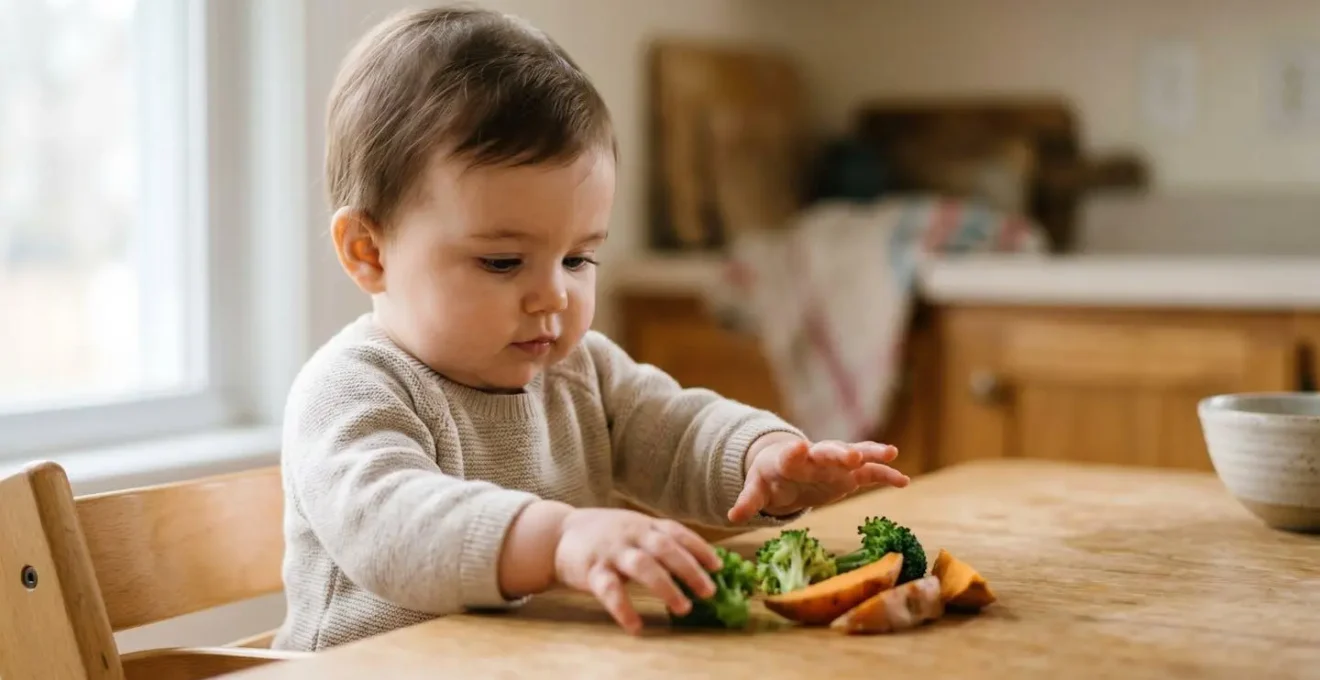
As this image shows, the act of grasping a piece of soft avocado is about more than just eating; it’s a rich sensory-motor experience. It develops hand-eye coordination and the foundational grasps that pave the way for more refined skills later. Ultimately, the « best » method is one that is safe, enjoyable, and reduces stress for both you and your baby, turning mealtimes into a positive experience of discovery.
Why Babies Who Only Eat Smooth Purees at 9 Months Often Reject Lumps at 12 Months?
While purees are a perfectly acceptable way to start weaning, exclusively offering silky smooth textures for too long can inadvertently create feeding challenges down the line. There is a critical developmental window for introducing more complex, lumpy textures. Research suggests this window lies roughly between 6 and 9 months of age. During this period, babies are neurologically primed to learn how to manipulate, move, and manage different textures in their mouth. Missing this window can have lasting effects.
A landmark UK study (ALSPAC) has provided powerful evidence on this topic. It found that the introduction of lumpy foods at or after 10 months was associated with significantly more feeding difficulties at 15 months. Even more strikingly, these children were found to be pickier eaters who consumed fewer fruits and vegetables at 7 years old. This demonstrates that the skills for managing texture are learned, and the brain is most receptive to this learning early on. When a baby is only exposed to smooth purees, their oral motor skills for chewing and moving food side-to-side don’t get the practice they need.
When a lump is finally introduced to a 12-month-old who has only known smooth food, their brain perceives it as a foreign and potentially unsafe object, triggering a gag reflex or outright rejection. This isn’t just « pickiness »; it’s a skill deficit. The key is a gradual and timely progression of textures, moving from smooth to mashed, then to minced and finally to soft, chopped pieces. This steady increase in complexity builds your baby’s oral motor confidence and skills step by step.
Your Action Plan: The 6-Stage Texture Progression
- Stage 1 (around 6 months): Silky Smooth Puree – Thin, pourable consistency, single ingredients (e.g., pureed carrot with breast milk/formula).
- Stage 2 (6-7 months): Thickened Puree – Falls off the spoon in dollops, slightly more texture (e.g., thicker sweet potato puree).
- Stage 3 (7-8 months): Mashed/Fork-Crushed – Soft lumps are present, easily squashed between your fingers (e.g., mashed banana or avocado).
- Stage 4 (8-9 months): Grated/Minced – Small, distinct but soft pieces that encourage a chewing motion (e.g., grated cheese, finely minced chicken).
- Stage 5 (9-10 months): Soft-Cooked Small Chunks – Finger-food sized pieces that require more active chewing (e.g., small pieces of cooked pasta, soft-cooked vegetable sticks).
- Stage 6 (10-12 months): Multi-Textured Family Meals – Modified versions of what the family is eating, combining various textures in one dish.
Why Starting With Sweet Fruits Before Vegetables Shapes Taste Preferences for Years?
Babies are born with an innate preference for sweet tastes, a biological holdover that drew our ancestors to energy-rich foods like breast milk and ripe fruit. In contrast, an appreciation for bitter and more complex flavours, which are common in many vegetables, is a learned behaviour. This is why the very first tastes you introduce can have a profound impact on shaping your baby’s palate for years to come. If the first foods are predominantly sweet fruits like banana or apple puree, it reinforces this existing preference, making the subsequent introduction of more challenging bitter vegetables like broccoli or spinach more difficult.
As experts at Danone Research & Innovation note, « It is now recommended that complementary feeding should start with vegetables instead of fruits. Vegetables are often bitter and acceptance of this taste has to be learnt. » By leading with a variety of single-ingredient vegetable purees for the first couple of weeks, you expose your baby’s developing palate to a wider range of flavours during a highly receptive period. This « vegetable-first » approach helps to normalise these tastes before the stronger sweet preferences are repeatedly reinforced.
This early dietary diversity also plays a crucial role in another invisible but vital area: the gut microbiome. The introduction of solid foods marks a massive shift in the composition of your baby’s gut bacteria. A 2021 study revealed that during the two-week period surrounding solid food introduction, microbial diversity increased significantly and was directly linked to dietary diversity. Offering a wide array of plant-based foods from the start helps to cultivate a robust and diverse microbiome, which is linked to better metabolic health and a stronger immune system throughout life. So, while a sweet fruit puree might get a more enthusiastic initial reception, prioritising vegetables is an investment in their long-term health and adventurous eating.
How to Tell the Difference Between Gagging and Choking During Baby-Led Weaning?
For any parent, but especially those trying baby-led weaning, the fear of choking is significant. It’s crucial to understand the profound difference between gagging and choking. Gagging is a normal, noisy, and protective reflex. It’s the body’s natural safety mechanism to prevent choking. A baby’s gag reflex is much farther forward on their tongue than an adult’s, which is why they gag more easily. When a piece of food is too large or too far back too soon, the reflex triggers, pushing the food forward so they can try again. Gagging is a key part of them learning to manage food. Choking, on the other hand, is silent and life-threatening, as the airway is blocked.
Knowing the signs is the most powerful tool you have. A gagging baby is loud: they will cough, splutter, and make retching sounds. Their face may turn red, but they are actively trying to clear the food and are still breathing. A choking baby is silent or can only make quiet, ineffective wheezing sounds. They cannot cry or cough. They may look panicked and their skin colour can change to blue or pale. While it can be distressing to watch, the best response to gagging is to stay calm and do nothing. Give them a few seconds to work it out themselves. Intervening can startle them and potentially turn a gag into a true choke.
Parents can also be reassured by data showing that the method of feeding does not significantly increase risk when foods are prepared safely. A 2022 cross-sectional study in Poland found that choking occurred at similar rates in both spoon-fed and BLW babies. The key to safety is always offering age-appropriate textures (soft enough to squish between your fingers) and shapes (avoiding small, hard, round items like whole nuts or grapes).
The following table breaks down the critical differences to help you respond appropriately and confidently.
| Characteristic | Gagging (Normal & Protective) | Choking (Emergency) |
|---|---|---|
| Sound | Loud coughing, gagging noises, may cry | Silent or very quiet, no effective cough |
| Baby’s Control | Baby is in control, working it out | Baby is panicked, not in control |
| Color | Normal skin color maintained | Color may change (red, then blue/pale) |
| Breathing | Can breathe and cough | Cannot breathe, ineffective cough |
| Body Position | Upright or leaning forward | May slump, unable to maintain posture |
| Eyes | May water, but alert | Look of terror, wide-eyed panic |
| Parent Action | Sit on hands, count to 10, observe closely | Immediate intervention: back blows, first aid |
Why Your Baby Must Master the Raking Grasp Before the Pincer Grasp Emerges?
Watching your baby’s hand skills develop is fascinating, and it’s more than just a cute milestone; it’s a window into their cognitive development. Before they can master the delicate pincer grasp (using the thumb and forefinger to pick up small items), they must first conquer the raking grasp. This earlier, less refined movement, typically emerging around 6-7 months, involves using all their fingers like a rake to scoop an object towards their palm. This isn’t a clumsy attempt at a pincer; it’s a completely different and essential neurological stage.
As occupational therapy research highlights, the raking grasp is the brain’s first large-scale solution to the problem of getting an object. It’s a whole-hand, sensory-rich experience that provides massive feedback, mapping the entire palm and developing stability in the shoulder and elbow. It teaches cause and effect on a grand scale: « I move my whole arm and hand, and that piece of banana comes closer. » This foundational work must be done before the brain can move on to the fine-finishing work of isolating the thumb and index finger.
Providing opportunities for self-feeding with larger, graspable pieces of soft food is the perfect practice for this skill. This hands-on experience is directly linked to better developmental outcomes. A 2024 nationwide birth cohort study demonstrated that a late introduction to food pieces requiring grasp (after 10 months) was associated with lower neurodevelopmental scores in early childhood, particularly affecting motor and language domains. When a baby successfully rakes a piece of avocado into their hand and brings it to their mouth, they are doing more than just eating; they are building the physical and cognitive architecture for future, more complex skills.
Key takeaways
- Timing is developmental, not behavioural: True readiness is about physical milestones like sitting unsupported, not misinterpreting sleep changes or curiosity.
- Texture progression is crucial: A timely and gradual introduction of lumps between 6-9 months is vital for developing oral motor skills and preventing long-term picky eating.
- Early allergen introduction prevents allergies: The modern, evidence-based approach is to introduce common allergens like peanut and egg around 6 months to train the immune system for tolerance.
Why the Research Showing Early Peanut Introduction Prevents Allergy Changed Everything?
For decades, the prevailing advice given to parents was to delay the introduction of highly allergenic foods, such as peanuts and eggs, until after the first year. This advice, born from caution, has now been completely overturned by a wave of landmark research that has fundamentally changed our understanding of how food allergies develop. The new paradigm is clear: early and regular introduction of these foods is a powerful strategy to *prevent* allergies from developing in the first place.
This shift was driven by studies showing that delaying introduction, while simultaneously being exposed to allergens environmentally (e.g., peanut dust in the home), could lead to the immune system becoming sensitised through the skin, priming it for an allergic reaction when the food is finally eaten. Conversely, early oral introduction helps to train the gut’s immune system to recognise the food as safe, promoting tolerance. This is the core of the Dual-Allergen Exposure Hypothesis. As a result, updated 2024 clinical guidelines state that allergenic foods should be introduced in an age-appropriate form from when weaning begins.
This evidence-based change empowers parents to be proactive. For most babies, this means you can introduce well-cooked egg and smooth peanut butter (thinned with a little water or milk) from around 6 months, alongside other foods. For babies with existing risk factors, such as severe eczema or an existing food allergy, it’s important to speak to your GP, health visitor, or a paediatrician first, as they may recommend introduction even earlier (from 4 months) under medical guidance. This strategic approach has turned allergy advice on its head, moving from a culture of avoidance to one of active, evidence-based prevention.
Your Action Plan: Risk-Based Guide for Early Peanut Introduction
- High Risk (severe eczema and/or egg allergy): Speak to your GP or an allergist before introduction. They may advise allergy testing and introduction as early as 4-6 months under medical supervision.
- Moderate Risk (mild to moderate eczema): You can introduce peanut protein at home around 6 months. There’s no need to see a doctor first unless you are concerned.
- Low Risk (no eczema or other food allergies): Introduce peanut protein freely with other foods from around 6 months as part of a varied diet.
- Safe Preparation: Never give whole peanuts. Offer as a thin, smooth peanut butter (thinned with breast milk, formula or water to a soupy consistency) or as peanut puffs that dissolve easily in the mouth.
- Maintain Exposure: Once introduced successfully, aim to offer peanut protein regularly (e.g., around 2 teaspoons, 2-3 times a week) to help maintain the body’s tolerance.
Why the Pincer Grasp at 9 Months Unlocks Self-Feeding and Independence?
If the raking grasp is the foundational skill, the emergence of the pincer grasp around 9 to 12 months is the grand finale of infant hand development. This is the moment a baby can deliberately use the tips of their thumb and forefinger to pick up a small object, like a single pea or a piece of cereal. This seemingly simple action represents a massive cognitive leap. It marks the dawn of the « tool user, » demonstrating a new level of fine motor control and hand-eye coordination that is uniquely human. As child development researchers note, this skill strengthens connections between the brain’s hemispheres and builds the neurological framework for later abilities like writing and using cutlery.
In the context of weaning, the pincer grasp is a game-changer for independence. It allows your baby to take full control of their self-feeding, precisely selecting and picking up smaller pieces of food. This autonomy is incredibly empowering and can have positive effects on their willingness to try new things. In fact, research updated through 2024 confirms that this process fosters less neophobia (fear of new foods) compared to babies who are exclusively spoon-fed. By having the control to explore food on their own terms, they build confidence and a more adventurous palate.
Encouraging this skill is simple: continue to offer a variety of soft, safely-prepared foods of different shapes and sizes. As their raking grasp becomes more efficient, start including smaller, pincer-friendly items like soft-cooked peas, small pieces of pasta, or blueberries (squashed to be safe). Watching them transition from clumsy raking to precise pinching is watching their brain build new connections in real-time. Every successful pincer grasp at mealtime is a small victory for their independence and a step towards becoming a competent, confident eater.
By understanding these crucial developmental windows for the gut, palate, motor skills, and immune system, you can confidently navigate your baby’s weaning journey. Trusting this process and responding to your baby’s true developmental cues, rather than the clock or outside pressure, will foster a positive and lifelong relationship with food.