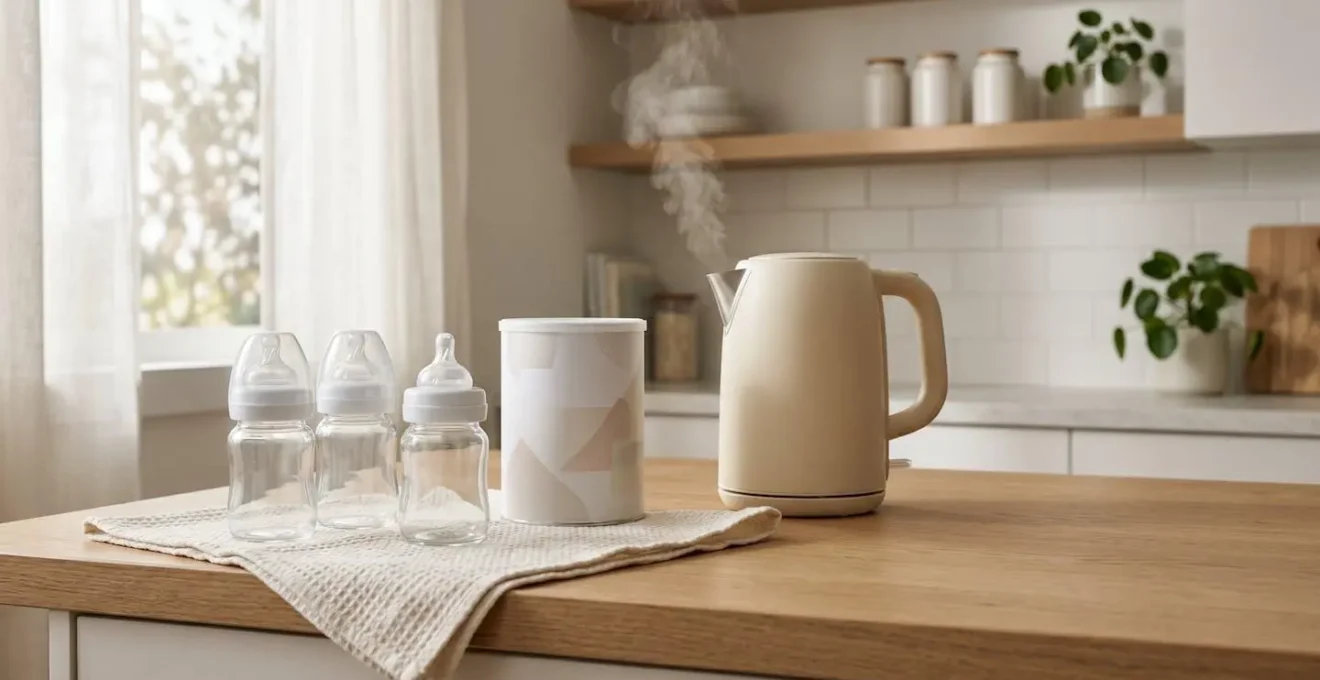
Despite slick marketing and vast price differences, all first infant formula sold in the UK is legally required to be nutritionally the same.
- The choice between brands like Aptamil or supermarket own-brands like Aldi Mamia is one of price, not nutritional quality.
- Safety is not in the brand, but in the preparation: using water at 70°C is a non-negotiable microbial kill step to eliminate harmful bacteria.
Recommendation: Choose the first infant milk that fits your family’s budget and focus your attention on mastering the strict safety protocols for preparation and storage.
Walking into the baby aisle can feel like an exam you haven’t studied for. You’re met with a wall of brightly coloured tins, all promising the best start for your baby. Some are reassuringly expensive, others seem suspiciously cheap. You see claims of « advanced » ingredients, « gentle » proteins, and unique formulations. It’s a confusing landscape, especially when you’re sleep-deprived and just want to do the right thing.
Many parents believe the solution is to find the « best » brand, or to switch formulas if their baby shows the slightest sign of fussiness. They might be tempted by specialist anti-reflux or comfort milks at the first sign of trouble. The underlying assumption is that these different products offer a meaningful difference in quality or effectiveness.
But what if the key to navigating this choice wasn’t in deciphering marketing claims, but in understanding a simple, powerful fact? UK and EU law provides a strict regulatory mandate for the composition of all first infant formulas. This means the real areas where parents can make a difference are not in brand selection, but in the science of safe preparation and storage, and in learning to distinguish normal baby behaviour from genuine medical concerns. This guide is designed to empower you with that knowledge, moving you from a confused consumer to a confident caregiver.
This article provides a clear, evidence-based path through the marketing noise. We will explore why formulas are nutritionally identical, the critical science behind safe preparation, and how to know if a specialist formula is truly needed.
Summary: A Paediatric Dietitian’s Guide to UK Infant Formula
- Why Aptamil, SMA, and Cow & Gate Are Nutritionally Identical Despite Different Prices?
- Why Water Must Be at Least 70°C When Adding Powder to Kill Bacteria?
- Why Pre-Made Bottles in the Change Bag Grow Dangerous Bacteria Within 2 Hours?
- Why Changing Formula Brands Every Week Disrupts Your Baby’s Gut More Than It Helps?
- When Does Your Baby Actually Need Hydrolysed or Anti-Reflux Formula vs Standard?
- Why Your Baby’s Skin Cannot Handle Adult Products Until Month 3?
- NHS Healthy Start Vitamins vs Premium Brands: Which Delivers Better Absorption?
- Why Water and Cotton Wool Beat Fancy Wipes for the First 6 Weeks?
Why Aptamil, SMA, and Cow & Gate Are Nutritionally Identical Despite Different Prices?
The single most important fact to understand about first infant formula in the UK is that it is one of the most strictly regulated food products on the market. By law, any product sold as a « first infant milk » (suitable from birth) must meet a specific, detailed compositional profile. This regulatory mandate dictates the minimum and maximum levels of energy, protein, fat, carbohydrates, vitamins, and minerals. As the NHS clearly states, « By law, all Infant formula milks must have the same composition. »
This means whether you buy a premium-priced brand like Aptamil or a supermarket’s own-brand like Aldi Mamia, you are providing your baby with the same essential nutrition. The added ingredients in more expensive formulas, such as prebiotics (GOS/FOS) or higher levels of certain fatty acids (DHA), are optional extras. While they are safe, there is currently not enough robust, independent scientific evidence to prove they provide a significant health benefit for the average baby, which is why they are not legally required.
The price difference is therefore a result of marketing budgets, packaging, and brand positioning, not a reflection of nutritional superiority. Research highlights that the most expensive first infant formula is now twice as expensive as the cheapest available option. Choosing the more affordable formula is a safe, sensible, and financially sound decision that does not compromise your baby’s health or development. The guilt often associated with choosing a cheaper brand is a testament to effective marketing, not nutritional science.
Why Water Must Be at Least 70°C When Adding Powder to Kill Bacteria?
While formula powder is sterile when it’s sealed in the tin, it is not a sterile product once opened. It can, in rare cases, contain low levels of harmful bacteria, most notably Cronobacter sakazakii. For a healthy, full-term baby, this might not cause an issue, but for newborns or vulnerable infants, it can lead to serious illness. This is not a UK-specific issue; for instance, there are approximately 18 cases of invasive C. sakazakii infection in infants annually in the United States. The risk is low, but the consequences can be severe, which is why the safety guidance is so strict.
This is where the 70°C rule comes in. It is not about dissolving the powder better; it is a critical microbial kill step. The official guidance from UK health authorities is unequivocal. As stated by the Chief Medical Officer for England, it is best practice to use water at a temperature of 70°C or above. This temperature is hot enough to destroy any potential bacteria in the powder, effectively sterilising the feed just before you give it to your baby. You should boil a fresh kettle of water, leave it to cool for no more than 30 minutes (which keeps it above 70°C), add it to the bottle, and then add the powder.
Some parents worry the hot water will destroy the nutrients in the formula. This is a myth. The formula is designed to withstand this process. The real risk comes from not using water that is hot enough. Following this rule every single time is one of the most important things you can do to ensure your baby’s safety when formula feeding.
Why Pre-Made Bottles in the Change Bag Grow Dangerous Bacteria Within 2 Hours?
A prepared formula feed is a perfect breeding ground for bacteria. It is a warm, nutrient-rich liquid that allows any present bacteria to multiply rapidly. This is why a freshly made bottle, once cooled to feeding temperature, must be handled with strict time limits. The international consensus, supported by bodies like the CDC, is that prepared infant formula should be used within 2 hours of preparation. Furthermore, once your baby starts drinking from the bottle, the clock shortens to just one hour. This is because bacteria from your baby’s mouth are introduced into the milk, accelerating growth.
This makes the common practice of making up bottles in advance and carrying them in a change bag extremely risky. A cool bag may slow down bacterial growth, but it doesn’t stop it. After a couple of hours at room temperature or in a bag, a bottle that was perfectly safe can become a source of stomach upset or, in worse cases, serious illness. You should never use a bottle that has been at room temperature for more than two hours.
So, how do you feed your baby on the go? The NHS provides clear, safe alternatives that prevent you from ever needing to carry a pre-made bottle. The gold standard is to carry a vacuum flask of freshly boiled water (which stays above 70°C for several hours) and pre-measured portions of powder in a separate, sterile container. You then make the feed fresh when needed. An even simpler, albeit more expensive, option is to use ready-to-feed liquid formula cartons, which are sterile until opened. These are the only truly safe ‘grab-and-go’ solutions.
Why Changing Formula Brands Every Week Disrupts Your Baby’s Gut More Than It Helps?
When a baby is fussy, gassy, or has changes in their stool, a parent’s first instinct is often to blame the formula and try a different brand. While well-intentioned, this frequent switching can cause more problems than it solves. The first few months of a baby’s life are a critical period for gut colonisation, the process by which a diverse and healthy ecosystem of bacteria establishes itself in their intestines. This developing gut microbiome is highly sensitive to its environment, with feeding type being a major influencing factor.
Case Study: The Impact of Feeding on the Infant Gut Microbiome
A 2020 study published in *Scientific Reports* followed 91 infants and found that feeding type was the most significant variable affecting their gut microbiota. The research showed that the infant microbiome undergoes distinct developmental phases that require a consistent environment to establish properly. While all formulas create a different gut environment compared to breastmilk, constantly changing the formula brand introduces new variables and disrupts these critical colonisation patterns, potentially leading to more digestive upset as the gut struggles to adapt repeatedly.
While all first infant milks are nutritionally equivalent, there can be subtle differences in the non-regulated components, such as the specific blend of whey and casein proteins or the type of oil used. Each time you introduce a new formula, your baby’s immature digestive system has to adjust. This can lead to temporary changes in stool consistency, colour, and frequency, as well as increased gas or fussiness—the very symptoms you were trying to solve. It’s best to choose one brand of first milk and stick with it. If you do need to change for any reason (e.g., availability or cost), do so gradually if possible, but then give your baby at least two weeks to fully adjust before deciding if the change has been positive or negative.
When Does Your Baby Actually Need Hydrolysed or Anti-Reflux Formula vs Standard?
The baby aisle presents a tempting array of « solutions » for common infant issues: anti-reflux (AR) formulas for sicky babies, comfort formulas for colic and constipation, and hydrolysed formulas for allergies. It’s easy for worried parents to self-diagnose and reach for one of these specialist milks. However, in the vast majority of cases, this is unnecessary and can mask underlying issues. Normal baby behaviours are often misinterpreted as medical problems. Posseting (bringing up small amounts of milk), occasional fussiness, and soft, frequent stools are all normal parts of having an immature digestive system.
True medical conditions that require specialist formulas are rare and must be diagnosed by a healthcare professional. For example, a cow’s milk protein allergy (CMPA) might be suspected if a baby has symptoms like severe eczema, blood or mucus in their stool, projectile vomiting, or failure to gain weight. In this case, a GP or health visitor may recommend a trial of an extensively hydrolysed or amino acid-based formula, which is often available on prescription. Similarly, severe reflux (GORD) that causes pain and poor weight gain is different from simple posseting and needs medical management, which may include a thickened, anti-reflux formula.
As the Derbyshire Family Health Service NHS advises, « If you think your baby may be allergic to their formula milk it’s important to speak to your GP or health visitor. » Self-prescribing these formulas is unwise. They are significantly more expensive if bought over the counter, can be less palatable, and can cause different stool types, creating a new set of worries. The first step is always to consult a professional.
Your Checklist: Differentiating Normal Baby Behaviours from Medical Red Flags
- Symptom Triage: Document specific symptoms. Is it small milk dribbles (posseting) or forceful projectile vomiting? Is the baby fussy for an hour or inconsolably crying for hours? Be specific.
- Stool Inspection: Observe and record. Are stools soft and yellow/green (normal for formula-fed babies), or do they contain visible blood or mucus (a red flag)?
- Skin Check: Look beyond a little dryness. Is there a persistent, severe eczema rash that does not respond to standard emollients? This can be linked to allergies.
- Weight and Feeding Behaviour: Monitor feeding and weight gain. Is the baby refusing feeds, appearing to be in significant pain during or after feeding, and failing to gain weight? This requires urgent medical advice.
- Professional Consultation: Before changing any formula, present your detailed observations to your Health Visitor or GP. They are the only ones who can perform a proper diagnosis and recommend or prescribe a specialist formula if it’s truly needed.
Why Your Baby’s Skin Cannot Handle Adult Products Until Month 3?
A newborn’s skin is fundamentally different from an adult’s. It’s thinner, more fragile, and has a higher pH, making it less acidic. The outermost protective layer, the stratum corneum, is not fully developed at birth. This ‘skin barrier’ is crucial for keeping moisture in and irritants, allergens, and germs out. In the first few months, this barrier is still a work-in-progress, making the skin highly permeable and susceptible to dryness and irritation.
Adult skincare products are formulated for mature skin. They often contain fragrances, preservatives, and active ingredients that are perfectly safe for adults but can be harsh and overwhelming for a baby’s delicate system. Using an adult lotion or wash on a newborn can strip away the skin’s natural protective oils, disrupt its pH balance, and damage the developing skin microbiome—the community of beneficial bacteria that helps protect the skin. This can lead to irritation, dryness, and even increase the risk of developing conditions like eczema.
During the first month, a baby’s skin needs very little. Plain water is sufficient for washing. If the skin is dry, a simple, fragrance-free emollient specifically designed for infants can be used. This ‘less is more’ approach allows the skin barrier to mature naturally without being overwhelmed by unnecessary chemicals. By around three months of age, the skin barrier is more robust and better able to tolerate a wider range of products, though it’s still advisable to stick to gentle, baby-specific formulations.
Key Takeaways
- By UK law, all first infant formulas are nutritionally equivalent, making budget-friendly options a safe and smart choice.
- The 70°C water rule is a critical, non-negotiable safety step to kill potential bacteria in formula powder.
- Specialist formulas for reflux or allergies should only be used after a diagnosis from a healthcare professional, not as a first resort for fussiness.
NHS Healthy Start Vitamins vs Premium Brands: Which Delivers Better Absorption?
For families who formula-feed, the topic of vitamins can be confusing. While infant formula is fortified with vitamins, UK Department of Health guidance recommends that all babies (whether breastfed or formula-fed) have a daily vitamin D supplement. This is because it is difficult to get enough from diet and sunlight alone. If your baby is drinking more than 500ml of formula a day, they are already getting enough vitamin D, and no extra supplement is needed. However, for those drinking less, or for families on a lower income, the NHS Healthy Start scheme is a vital resource.
The scheme provides free vitamin drops for pregnant women, new mothers, and children up to the age of four in eligible families. The important thing to know is that these vitamins are high quality. They contain Vitamin D3 (cholecalciferol), which is the most effective and easily absorbed form, the same form found in expensive, premium-brand supplements. The notion that a higher price equals better absorption is a marketing myth. The Healthy Start vitamins are specifically formulated to meet the nutritional requirements outlined by UK health experts.
Furthermore, the Healthy Start scheme offers significant financial support. It provides a weekly £8.50 payment to eligible families with a child under one, loaded onto a digital card. This can be used to purchase not only infant formula but also milk, fruit, and vegetables, helping to ensure foundational nutrition for the whole family. Checking your eligibility for this scheme is a practical first step before spending money on costly branded vitamin supplements that offer no proven benefit over the NHS-provided ones.
Why Water and Cotton Wool Beat Fancy Wipes for the First 6 Weeks?
The ‘less is more’ philosophy extends beyond feeding to newborn skincare. For the first four to six weeks of life, the best and kindest way to clean a baby’s bottom is with simple cotton wool and plain warm water. This recommendation is rooted in the science of a newborn’s skin and the natural protection they are born with.
At birth, many babies are covered in a waxy, white substance called vernix caseosa. This is a natural moisturiser and protector. The NHS often advises delaying the first bath to allow this to be absorbed. As one midwife guide explains, « This illustrates how nature has its own ‘product’ and we should interfere as little as possible. » This same principle applies to daily cleaning. Even the gentlest, ‘purest’ baby wipes contain ingredients and preservatives that can potentially disrupt the delicate, developing skin barrier and microbiome. Plain water has a neutral impact, cleaning effectively without stripping natural oils or introducing foreign substances.
After the first month or so, once the skin barrier has had time to mature, baby wipes can be a convenient option, particularly when out and about. However, it’s still wise to choose products that are as simple as possible—fragrance-free, alcohol-free, and designed for sensitive skin. But for those precious early weeks, sticking with cotton wool and water is not an old-fashioned choice; it’s an evidence-based one that gives your baby’s skin the gentlest possible start.
Armed with this knowledge about nutritional equivalence, safety protocols, and the ‘less is more’ approach to infant care, you can navigate the choices of early parenthood with confidence. Focus on what truly matters for your baby’s health and your own peace of mind, free from marketing-induced guilt.