In summary:
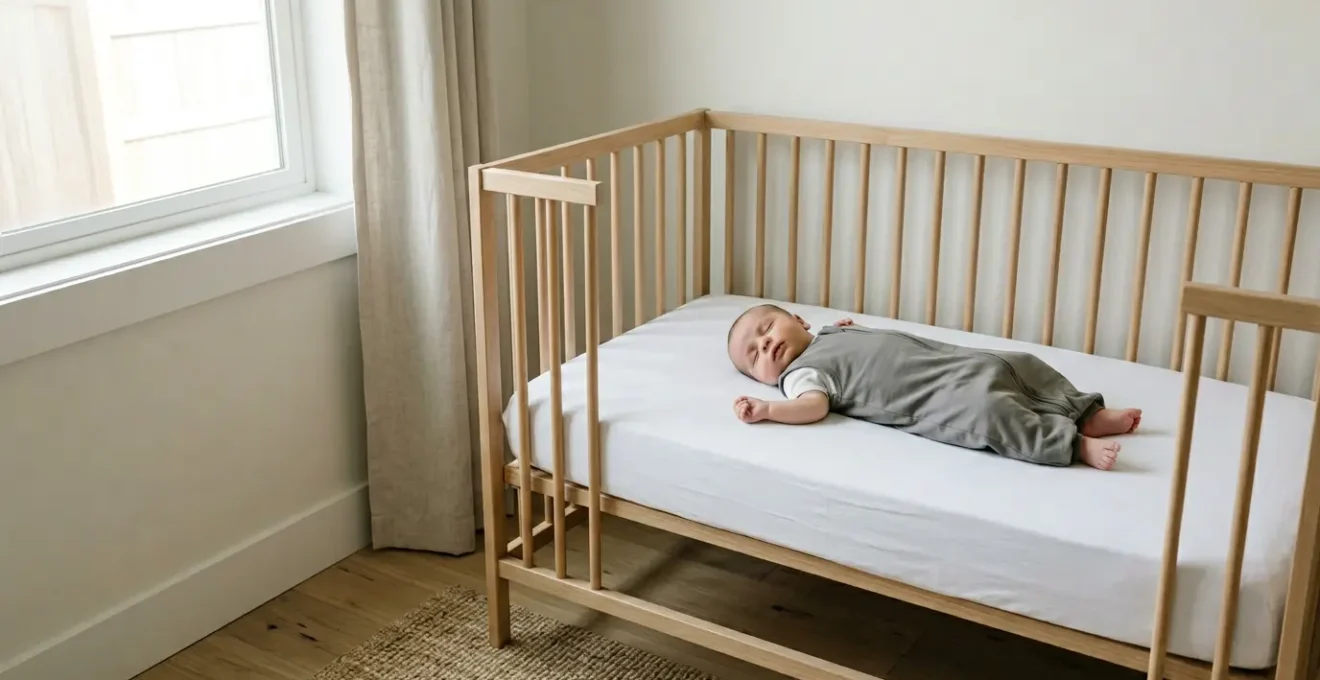
- Always place your baby on their back for every sleep, day and night, to drastically reduce the risk of SIDS.
- Maintain a room temperature of 16-20°C and use appropriate TOG-rated sleeping bags instead of loose blankets.
- Keep your baby’s cot clear of all items, including bumpers, toys, and pillows.
- Share a room with your baby for the first six months, but never the same bed, sofa, or chair.
- Use evidence and compassion to explain modern safety standards to family members with outdated advice.
Navigating the world of newborn sleep can feel like walking through a fog of conflicting advice. Your mother insists you slept on your stomach and « turned out fine, » while online forums are a dizzying maze of do’s and don’ts. For a new UK parent, this information overload isn’t just confusing; it’s terrifying, especially when the stakes are as high as Sudden Infant Death Syndrome (SIDS). You are handed a list of rigid rules—back to sleep, no blankets, feet to foot—but often without the crucial context that makes them stick.
The common approach is to simply list these recommendations. But this fails to address the real-world challenges: the 3 AM exhaustion when your baby will only settle on your chest, the drafty chill of a Victorian-era bedroom, or the difficult conversation with a well-meaning grandparent. The key to building unshakeable confidence in your choices isn’t just knowing the rules; it’s understanding the life-saving science behind them. It’s about moving beyond the « what » and mastering the « why. »
This guide changes the conversation. As a Lullaby Trust certified educator, my goal is not to give you another checklist, but to empower you with the physiological rationale and compassionate strategies behind each guideline. We will decode the science, tackle the awkward family dynamics, and provide practical solutions for the toughest moments. By understanding the « why, » you can transform anxiety into action and create the safest possible sleep environment for your baby, every single time.
In the following sections, we will explore the evidence behind each core safe sleep principle. This article is designed to be your definitive resource for navigating these critical early months with clarity and confidence.
Summary: A Lullaby Trust Educator’s Guide to Safe Sleep
- Why Stomach Sleeping Triples SIDS Risk Even When Your Baby Seems to Prefer It?
- How to Keep the Nursery at 16-20°C When Your Victorian House Has No Thermostat?
- 2.5 Tog or 1 Tog: How to Dress Your Baby for Sleep Based on Room Temperature?
- How to Tell Your Mother-in-Law Why Blankets in the Cot Are Dangerous Now?
- When Your Newborn Only Sleeps on Your Chest: Safer Alternatives at 3am?
- The Cosy Fleece Liner That Doubles Overheating Risk in Winter
- Why Blue Light from Your Phone at 3am Keeps You Awake for an Extra Hour?
- Why a Red Nightlight Preserves Your Baby’s Melatonin While White Light Destroys It?
Why Stomach Sleeping Triples SIDS Risk Even When Your Baby Seems to Prefer It?
The single most effective action you can take to lower the risk of SIDS is to place your baby on their back for every single sleep, both day and night. While some babies may seem fussier on their back, the safety implications of stomach sleeping are profound and non-negotiable. The primary danger lies in a phenomenon called carbon dioxide re-breathing. When a baby sleeps face down, they can become trapped in a small pocket of exhaled air against the mattress. Instead of breathing fresh air rich in oxygen, they rebreathe their own carbon dioxide, leading to a dangerous drop in blood oxygen levels and a rise in carbon dioxide.
A healthy older child or adult would instinctively turn their head or wake up in this situation. However, young infants, especially in the peak SIDS risk period of 2 to 4 months, have an immature arousal threshold. Their brain may not send the signal to wake up and escape the dangerous situation. Landmark research from the Safe to Sleep campaign reveals that the risk of SIDS is between 1.7 and 12.9 times higher for babies placed on their stomach compared to their back. This isn’t a suggestion; it’s a physiological imperative.
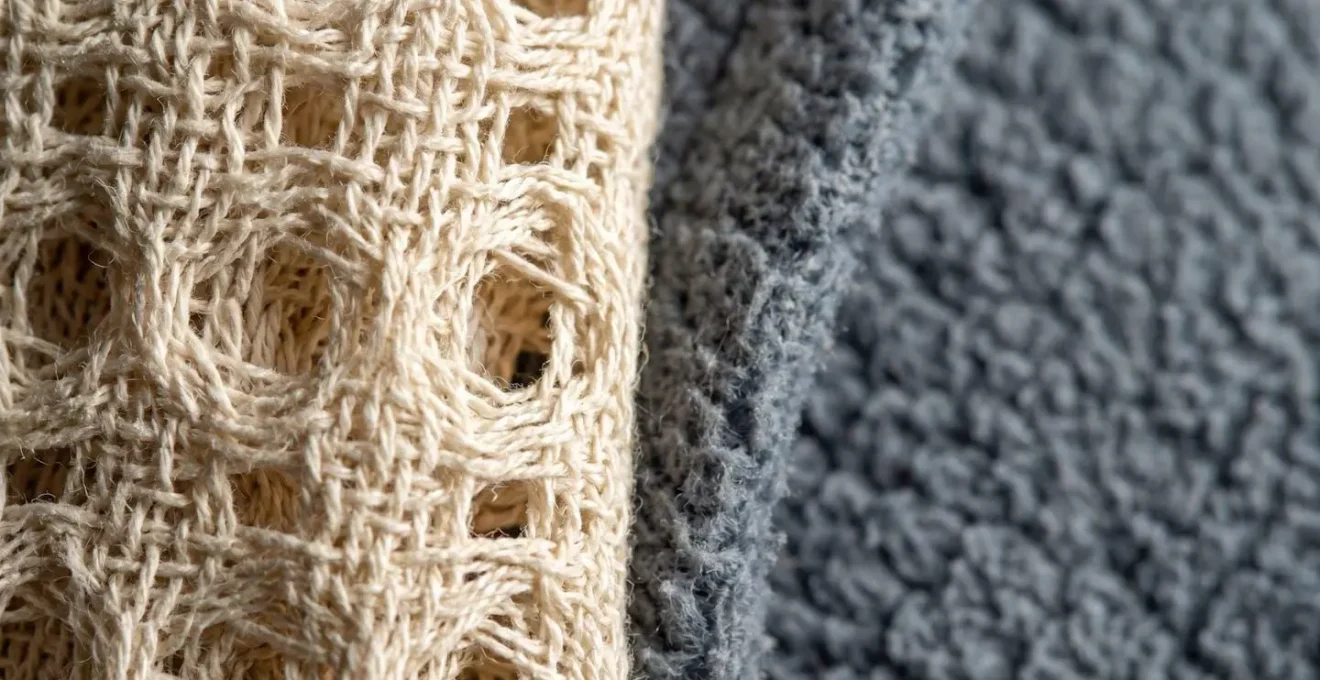
This illustration provides a powerful visual metaphor for breathability. The open, porous texture on one side represents a safe, firm, and flat mattress surface that allows air to circulate, while the dense, closed texture represents the danger of soft surfaces that can trap exhaled air.
Even if your baby learns to roll from back to front, you should continue to place them on their back to sleep. Once they can roll consistently both ways, they have developed the strength and coordination to move out of an unsafe position, but the initial placement must always be on the back. This consistent practice builds a foundation of safety that protects them through every stage of their early development.
How to Keep the Nursery at 16-20°C When Your Victorian House Has No Thermostat?
Overheating is a significant risk factor for SIDS. A baby’s ability to regulate their own body temperature, a process called thermoregulation, is still developing. They can lose heat rapidly but can also overheat quickly and are unable to cool themselves effectively by sweating like adults. This is why creating a stable thermal micro-climate in their nursery is so important. Official UK and European health guidelines specify that the ideal room temperature for a sleeping baby is between 16-20°C (61-68°F). This range feels cool to many adults, but it is the safest for an infant.
Achieving this in a modern, well-insulated home with a thermostat is one thing. Maintaining it in a classic, drafty UK Victorian or older property is another challenge entirely. Without central temperature control, you must become a more hands-on environmental manager. This doesn’t require expensive technology, but rather a consistent, low-tech approach to monitoring and adjusting your baby’s immediate surroundings. The key is to think in layers—both for the room and for your baby’s clothing.
The most reliable way to check your baby’s temperature is not by feeling their hands or feet, which are often naturally cooler. Instead, place your hand on the back of their neck, their chest, or their tummy. If their skin feels hot, sweaty, or clammy, they are too warm. This simple, tactile check is more accurate than any room thermometer alone. The following audit will help you systematically create a safer thermal environment, even in a challenging space.
Your 5-Step Nursery Temperature Safety Audit
- Points of Contact: Check the cot’s placement. Ensure it is not positioned next to a radiator, a heater, in direct sunlight from a window, or in a direct draught.
- Collecte (Data Gathering): Routinely check your baby’s temperature by feeling their chest, tummy, or the back of their neck to see if they feel hot or sweaty. Don’t rely on hands or feet.
- Cohérence (Consistency Check): Aim for a room that feels comfortable for a lightly clothed adult (16-20°C). Use a basic room thermometer to get a baseline reading, but trust your tactile check of the baby above all.
- Mémorabilité (Layering Strategy): Use layers of lightweight cellular blankets that can be easily added or removed, rather than one thick quilt or duvet. Better still, use a wearable sleeping bag of the correct TOG rating.
- Plan d’intégration (Positional Safety): If using blankets, always place your baby in the « feet to foot » position—with their feet touching the end of the cot—and tuck the blankets in securely no higher than their shoulders. This prevents them from wriggling down under the covers.
2.5 Tog or 1 Tog: How to Dress Your Baby for Sleep Based on Room Temperature?
Once you have a handle on the ambient room temperature, the next crucial step is dressing your baby appropriately. This is where the TOG (Thermal Overall Grade) rating system becomes an essential tool for new parents. A TOG rating is a standardized measurement used in the textile industry to indicate the warmth of a product. For baby sleepwear, it removes the guesswork and helps you prevent your baby from becoming too hot or too cold.
Loose blankets and bedding are no longer recommended due to the risk of suffocation and overheating if they cover the baby’s head. Baby sleeping bags are a much safer alternative. They are wearable blankets that cannot be kicked off, ensuring your baby stays at a consistent temperature all night. They also prevent the baby’s head from being accidentally covered. Choosing the right TOG rating is directly linked to the temperature of the nursery, not the season outside. A 2.5 TOG bag is for a cool winter nursery, while a 0.2 or 1.0 TOG bag is for warmer summer nights.
The following table provides a clear, evidence-based guide for matching the TOG rating of your baby’s sleeping bag with the nursery’s temperature. It is a vital reference for ensuring your baby’s thermal comfort and safety.
| TOG Rating | Room Temperature | Recommended Use | Layering Suggestion |
|---|---|---|---|
| 0.2 TOG | 24°C to 27°C (75°F to 81°F) | Hot summer weather | Diaper or single light bodysuit only |
| 1.0 TOG | 20°C to 24°C (68°F to 75°F) | Year-round/mild weather | Short-sleeved bodysuit |
| 2.5 TOG | 16°C to 20°C (61°F to 68°F) | Winter/cold weather | Long-sleeved sleepsuit or bodysuit |
| 3.5 TOG | Below 16°C (below 61°F) | Very cold conditions | Warm sleepsuit with socks under sleep bag |
Remember to never use a duvet, quilt, or pillow with a sleeping bag, as this will almost certainly lead to overheating. A simple sleepsuit or bodysuit underneath is usually all that is required. By using this TOG system, you can be confident that your baby is sleeping safely and comfortably, no matter the weather outside.
How to Tell Your Mother-in-Law Why Blankets in the Cot Are Dangerous Now?
One of the most emotionally challenging aspects of new parenthood is navigating advice from older generations. When your mother or mother-in-law, who raised healthy children, suggests using thick blankets, cot bumpers, or placing the baby on their tummy, it can create immense tension. It’s crucial to approach this conversation not as a criticism of their past parenting, but as a celebration of new scientific understanding. Your goal is to build a team approach to your baby’s safety.
A powerful way to frame this is by highlighting the incredible success of public health campaigns. You can explain that since the Safe to Sleep campaign launched in 1994, which promoted back sleeping and other safety measures, the rate of SIDS in countries like the UK and US has been reduced by more than 50%. This wasn’t because their generation did something « wrong, » but because medical science has made huge leaps forward in understanding infant physiology. Just as car seat technology has evolved dramatically, so has our knowledge of safe sleep.
This isn’t about opinion; it’s about data-driven progress. Sharing a concrete example of how this science has evolved can be incredibly effective in depersonalizing the conversation and fostering understanding.
Case Study: The Evolution of Paediatric Advice
In 1992, the American Academy of Pediatrics (AAP), based on international studies, first recommended that infants not be placed on their stomachs to sleep. The initial advice was for either the back or the side position. However, ongoing research revealed that the side position was also risky, as a baby could easily roll from their side onto their stomach but lacked the strength to roll back. Consequently, by 1996, the AAP updated its guidance to specify that only the supine (back) position should be used. This evolution shows that safe sleep advice isn’t static; it is constantly refined as more evidence becomes available. Framing it this way presents you as an informed parent following the latest medical consensus, not as someone rejecting family wisdom.
You can say something gentle but firm, like: « We’re so grateful for your experience, and we know you want what’s best for the baby. We’re following the latest Lullaby Trust and NHS guidance, which has changed a lot since we were little and has helped save so many lives. It’s really important to us that we all follow it consistently. » This honours their love while holding a firm boundary for safety.
When Your Newborn Only Sleeps on Your Chest: Safer Alternatives at 3am?
The deep, instinctual need for closeness is powerful for both you and your newborn. The warmth, the sound of your heartbeat, and the gentle rise and fall of your chest are incredibly soothing. It is no surprise that in the depths of a 3 AM feed, the most peaceful place in the world for your baby seems to be asleep on you. While this contact is vital for bonding during waking hours, allowing yourself to fall asleep with your baby on your chest, on a sofa, or in a chair is one of the most high-risk situations for SIDS and accidental suffocation.
The exhaustion is real and overwhelming, but the danger is greater. If you fall asleep, your baby can slip down into a position that obstructs their airway, or you could roll, trapping them against cushions. The Lullaby Trust and AAP are unequivocal: sofas and armchairs are not safe places for an infant to sleep. The safest place for your baby to sleep is in their own clear, flat sleep space, like a cot or Moses basket. Official guidance from bodies like the American Academy of Pediatrics found that room-sharing without bed-sharing reduces the risk of SIDS by as much as 50%. This means having your baby’s cot or Moses basket in your room, next to your bed, for the first six months.
This close proximity allows you to respond quickly to their needs while ensuring they have a protected space. To satisfy their need for contact, practice plenty of skin-to-skin during supervised, awake times. It offers all the same bonding benefits in a completely safe context.

If you find yourself becoming dangerously tired during a night feed, have a plan. Set an alarm on your phone. Ask your partner to take over for a shift. It is far safer to place your baby back in their cot and take a 15-minute break yourself than to risk falling asleep with them in an unsafe location. Your baby needs a safe parent as much as they need a rested one.
The Cosy Fleece Liner That Doubles Overheating Risk in Winter
In a cold British winter, the instinct to bundle your baby up in the cosiest, snuggliest materials is completely understandable. Soft, thick fleece liners for car seats, prams, and cots are marketed as essential comfort items. However, many of these after-market products can be dangerous. They are often made from synthetic materials that are not breathable and can contribute significantly to overheating—a major SIDS risk factor.
Unlike natural, breathable fibres like cellular cotton or merino wool, which allow air to circulate and moisture to wick away, synthetic fleece traps heat and moisture against the baby’s body. This can quickly raise their core temperature to unsafe levels without you even realizing it. As the NHS clearly states, the risk is not just about the room being too hot. In their safe sleep guidance, they are explicit:
Babies can overheat because of too much bedding or clothing, or because the room is too hot.
– NHS Safe Sleep Guidelines, Reduce the risk of sudden infant death syndrome (SIDS)
A thick fleece liner effectively acts as another high-TOG layer that hasn’t been safety tested with your specific car seat or sleeping bag. Research has linked overheating from high TOG bedding to an increased risk of SIDS, as it can deepen an infant’s sleep and suppress their natural arousal instincts. The rule is simple: only use products that came with your car seat or pram, as these have been crash-tested and designed for safe use. For the cot, stick to a firm mattress with a fitted sheet and a safely-rated sleeping bag. Adding extra padding or layers underneath the baby is unnecessary and introduces risk.
Key Takeaways
- The only safe sleep position is on the back for every sleep, as this prevents carbon dioxide re-breathing.
- Maintain the nursery at 16-20°C and use a TOG-rated sleeping bag instead of loose blankets to avoid overheating.
- Always keep the cot completely clear: no bumpers, no toys, no pillows, no loose bedding.
Why Blue Light from Your Phone at 3am Keeps You Awake for an Extra Hour?
In the quiet darkness of a 3 AM feed, the glow of your smartphone screen can feel like a lifeline to the outside world. Scrolling through social media or reading articles can seem like a harmless way to stay awake. However, that small screen is emitting a powerful signal to your brain that sabotages your ability to fall back asleep quickly. The culprit is blue light, a short-wavelength light that is highly effective at suppressing the production of melatonin.
Melatonin is often called the « hormone of darkness. » Your brain’s pineal gland begins to produce it as darkness falls, signalling to your body that it’s time to prepare for sleep. Exposure to light—especially blue light—sends a powerful « daytime » signal that halts melatonin production. Even a few minutes of scrolling can be enough to trick your brain into a state of alertness, making it significantly harder to drift back off to sleep once your baby is settled. You may find yourself lying awake for an hour or more, your mind racing, even though you are physically exhausted.
This isn’t just an inconvenience; it’s a critical issue for parental wellbeing and safety. Chronic sleep deprivation impairs judgment, slows reaction times, and can contribute to postpartum depression and anxiety. Protecting your own sleep is not a luxury; it is an essential part of being a safe and responsive caregiver. The solution is to create a zero-blue-light environment for night-time wakings. Keep your phone out of reach. If you need a distraction, consider an e-reader with the backlight turned off or set to a warm, amber tone, or listen to a podcast or audiobook on low volume.
Why a Red Nightlight Preserves Your Baby’s Melatonin While White Light Destroys It?
Just as blue light disrupts your sleep, it has the same effect on your baby’s developing circadian rhythm. A standard white or blue-hued nightlight, while seeming gentle, emits enough short-wavelength light to suppress melatonin production in your baby, potentially disrupting their natural sleep-wake cycles. This can lead to more frequent night wakings and difficulty settling—the very things you’re trying to avoid.
The science of light and sleep is clear: not all light is created equal. The human eye contains photoreceptors that are particularly sensitive to blue light for regulating our internal clock. However, these receptors are far less sensitive to long-wavelength light, such as red or amber light. This is why a dim, red-based nightlight is the superior choice for a nursery. It provides just enough light for you to navigate the room for a feed or a nappy change without sending a jarring « wake up » signal to your baby’s brain (or your own).
Using a red nightlight helps to preserve the « sleepy » environment. It keeps melatonin levels stable, making it easier for your baby to fall back asleep after being tended to. This simple switch can make a noticeable difference in the quality and consolidation of your baby’s night-time sleep over time. It helps them learn the crucial distinction between day and night. Think of it as creating a protective sleep bubble, shielded from the disruptive signals of the modern, light-filled world.
By applying these evidence-based principles with consistency and confidence, you are giving your baby the greatest gift: a safe place to rest and grow. Trust the science, trust your instincts, and know that you are doing everything right to protect your precious little one.